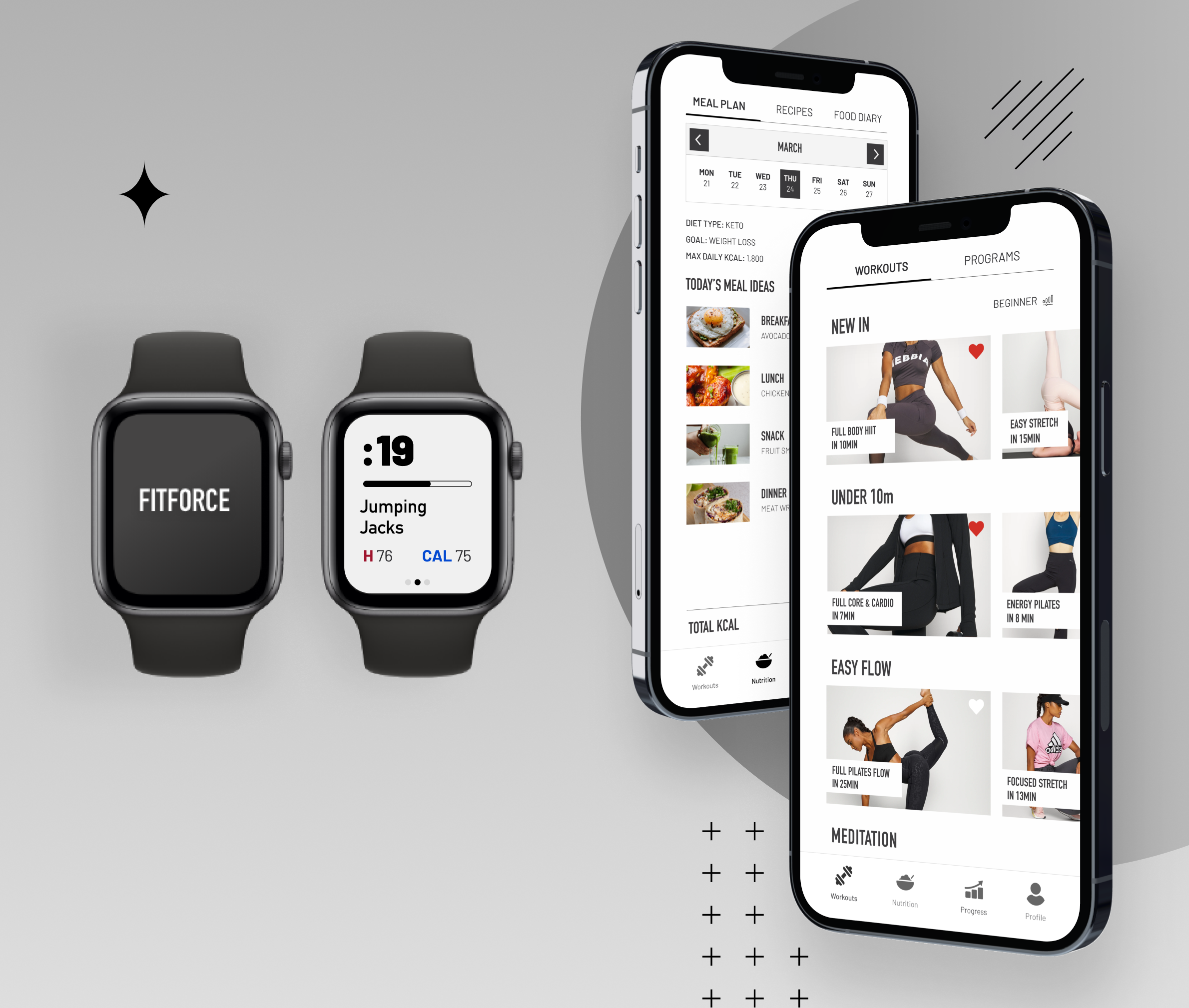
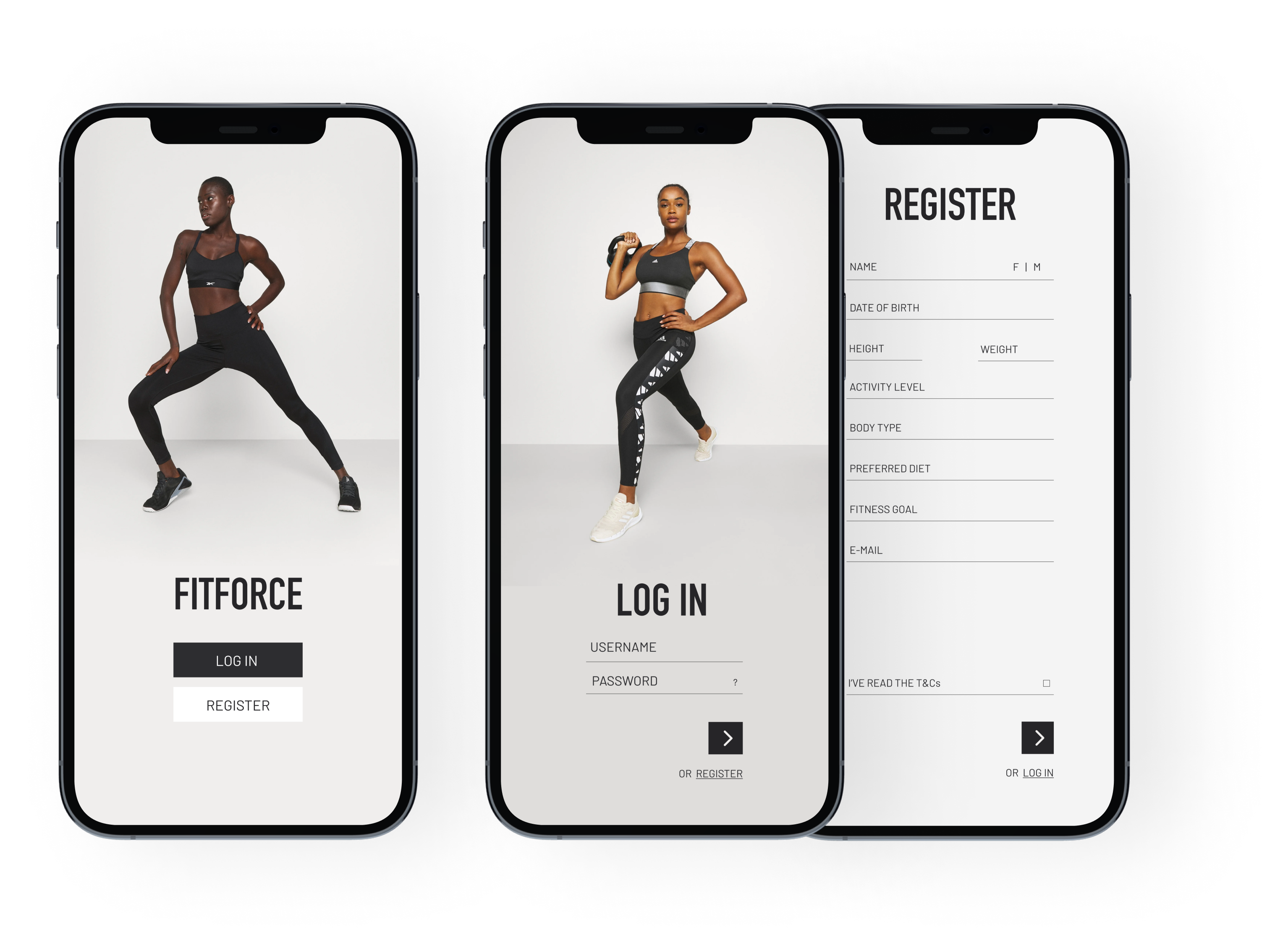
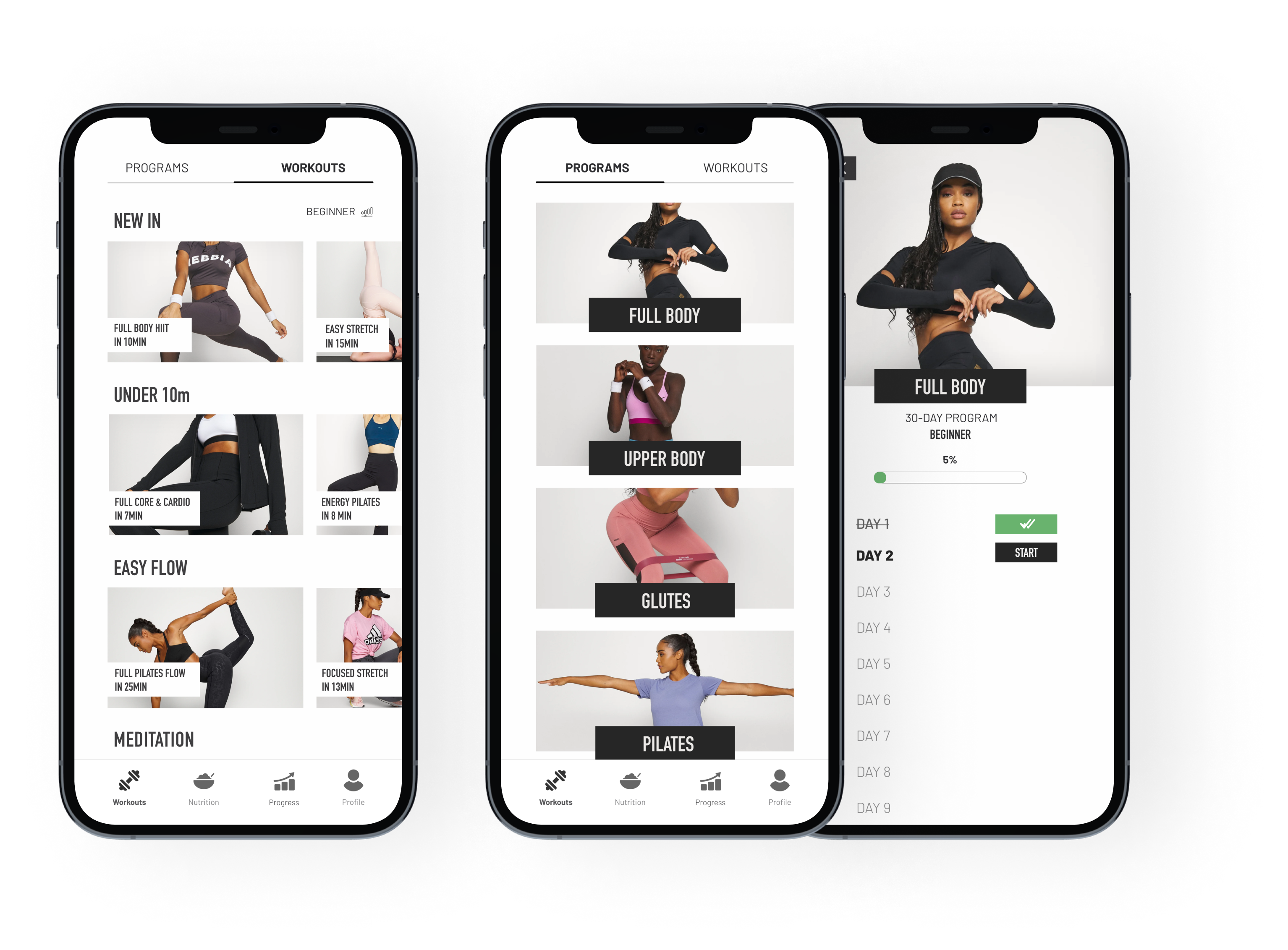
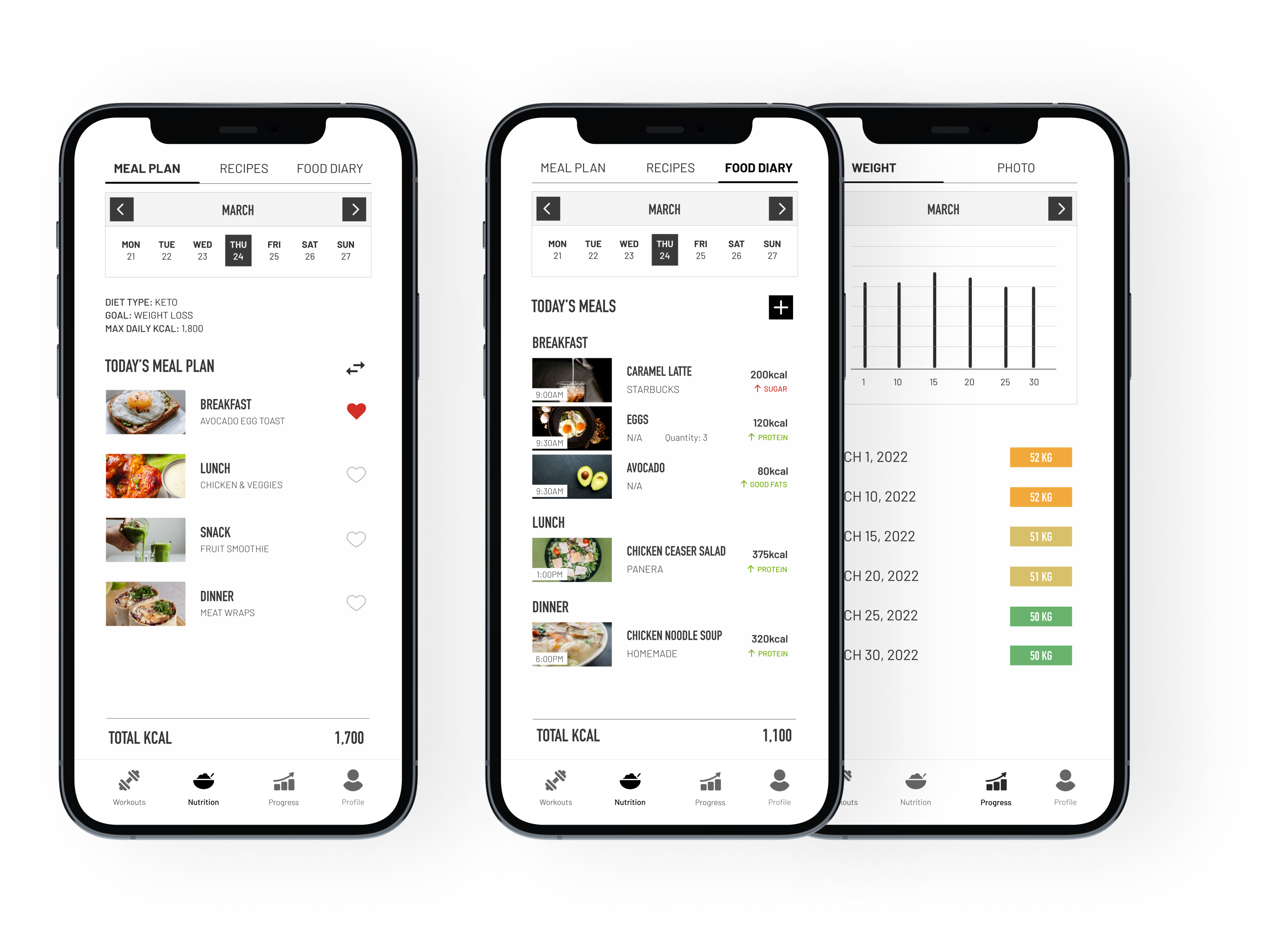
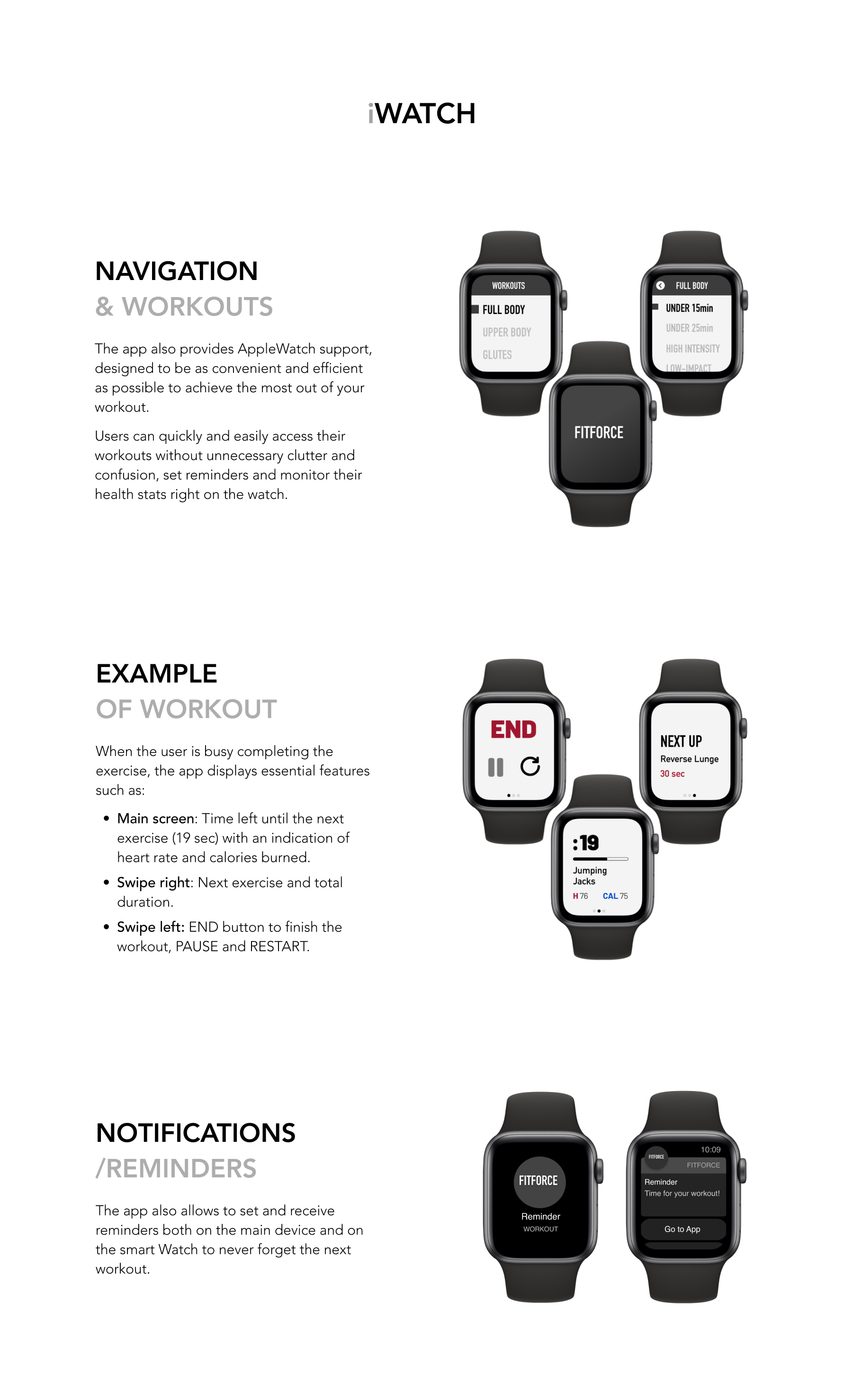
FITFORCE is a fitness app that provides a comprehensive solution that goes beyond traditional workout and meal plan apps. This project aims to provide a holistic solution for users, integrating workouts, meal planning, recipes, food tracking, and progress monitoring, as well as offering a seamless integration with Apple Watch, enhancing user experience and accessibility.
Role
Research, UX Design, UI Design (Personal Project)
Tools
Figma, Adobe CC, Miro, Tally, HeyCollab
The problem
The inspiration behind FITFORCE came from personal struggles with finding a single, comprehensive app to support my weight loss journey. Existing fitness apps primarily focused on workouts or meal plans, leaving users with fragmented solutions and the need to juggle multiple apps.
The solution
The solution was to create an all-encompassing platform tailored to a variety of fitness levels, featuring:
A diverse range of workout programs.
Personalised meal planning with nutritious recipes.
A food diary to monitor daily intake
A progress tracking system utilising photo uploads to visualise body transformations.
Full integration with Apple Watch to provide real-time health data accessibility.
The Process
The Research
Competitive Analysis
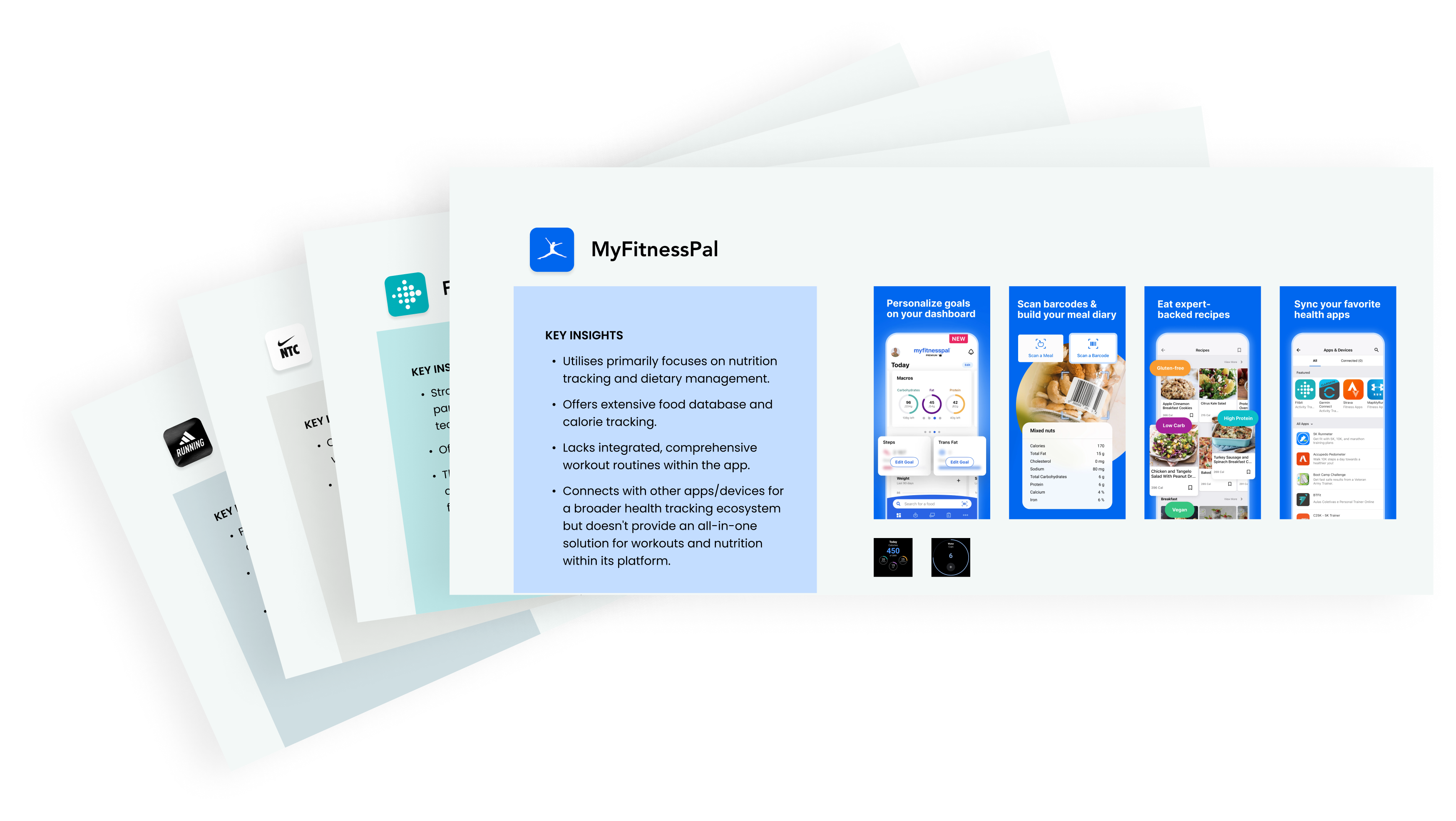
To gain a comprehensive understanding of the market, I carefully evaluated the most popular existing fitness and nutrition apps, such as MyFitnessPal, Fitbit, Nike Training Club and Adidas Running.
In summary, while each of these apps offers strong features in either fitness tracking or nutrition management, none provides a fully integrated, comprehensive solution covering fitness routines, personalised meal planning, nutrition tracking in the way FITFORCE aims to.
Qualitative Analysis
To dive deeper into user behaviours and attitudes, I’ve conducted qualitative research. The process included surveying potential users and synthesising the collected data in order to create empathy maps and user personas, essential in understanding users' needs and pain points.
Key Insights
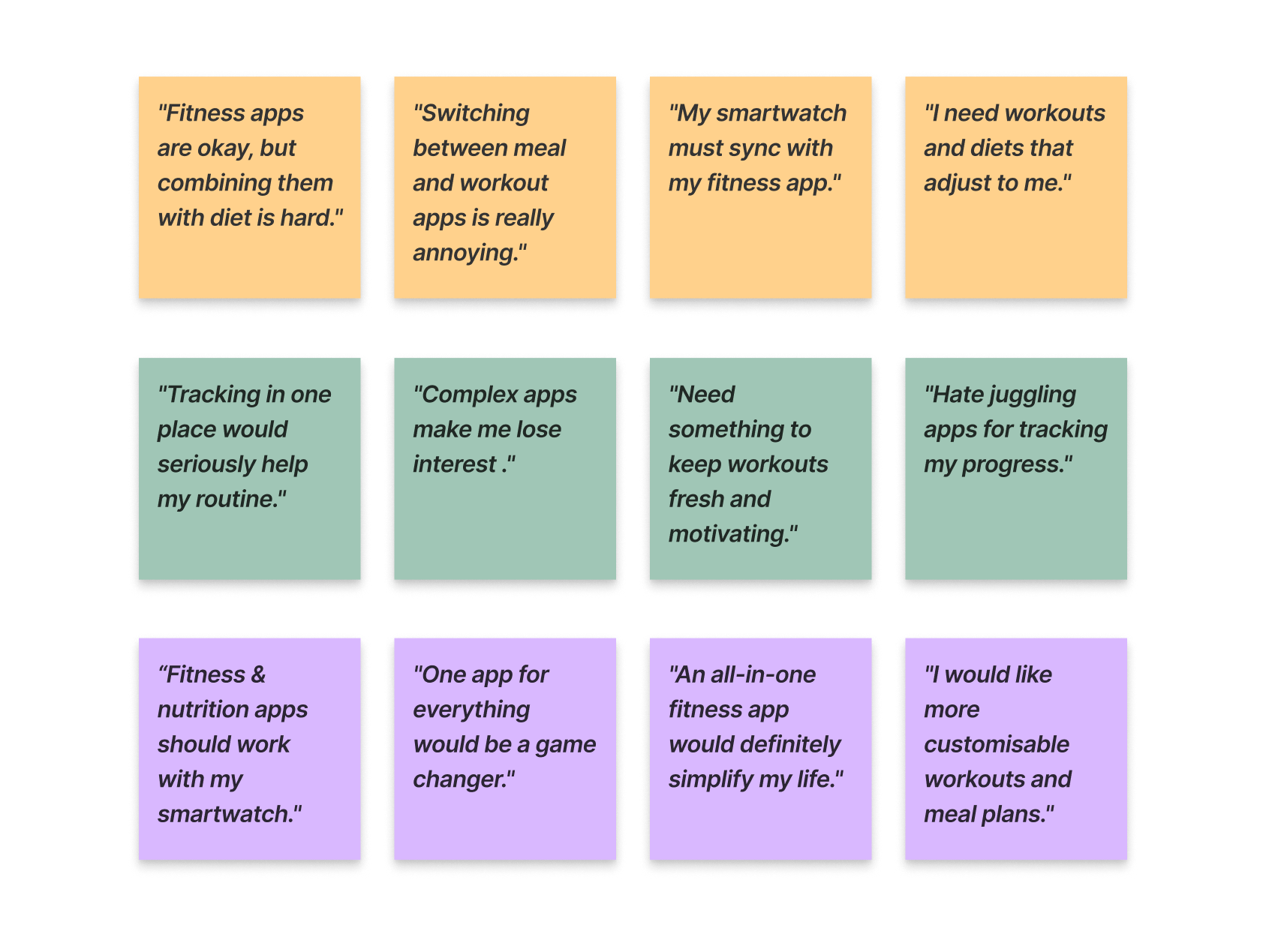
Surveys with potential users revealed critical elements for a more integrated fitness experience. (Responses: 13)
Data showed the following key challenges:
Users find switching between fitness and nutrition apps time-consuming.
Personalisation in workout and meal plans is a significant user expectation.
The majority of users want more integration with their Smart Watch.
Empathy Map
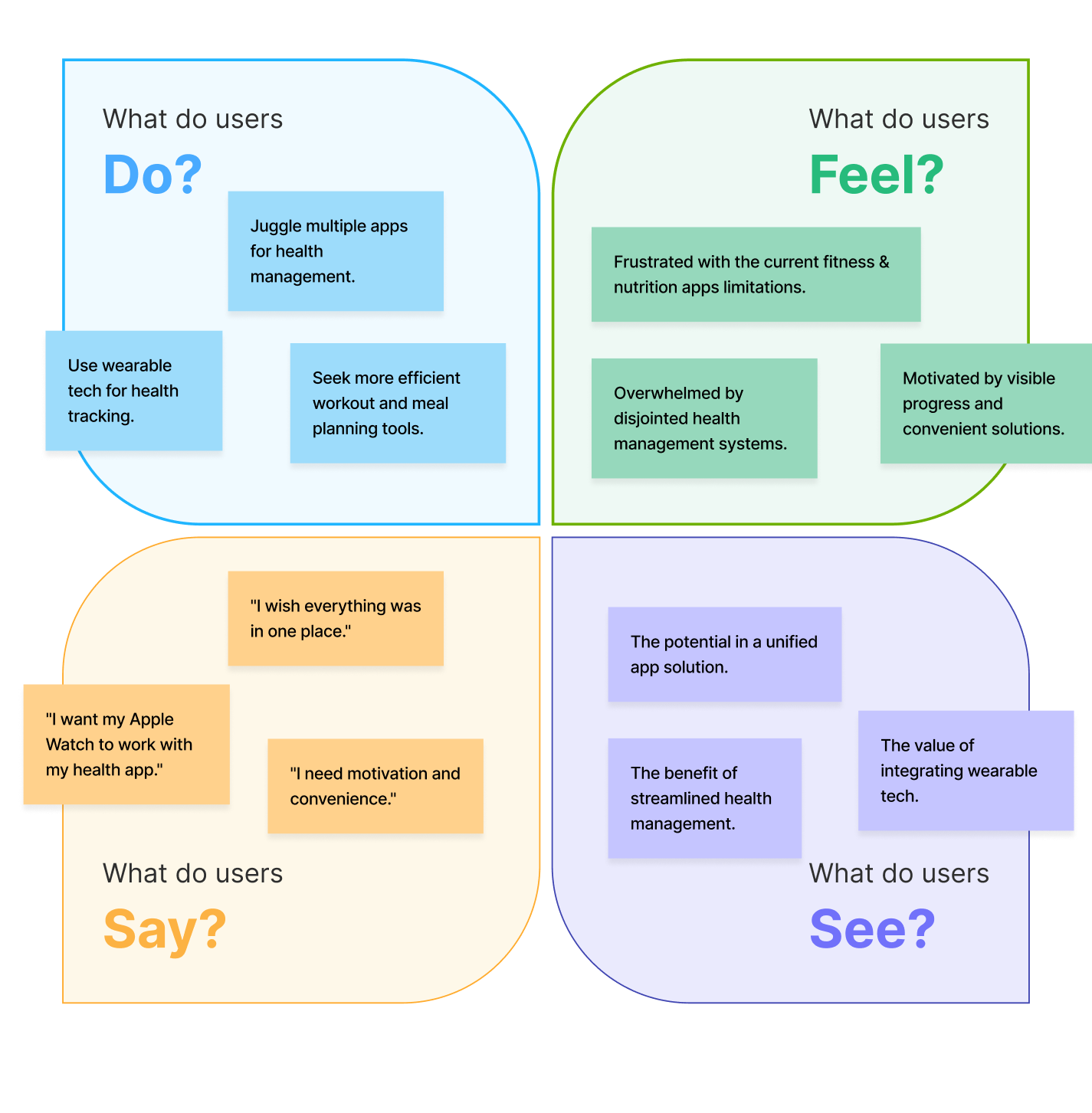
To gain a holistic understanding of our users, I synthesised data into an empathy map, revealing key user actions, thoughts, feelings, and visual perceptions. This process further highlighted the urgent need for a streamlined health management.
User Personas
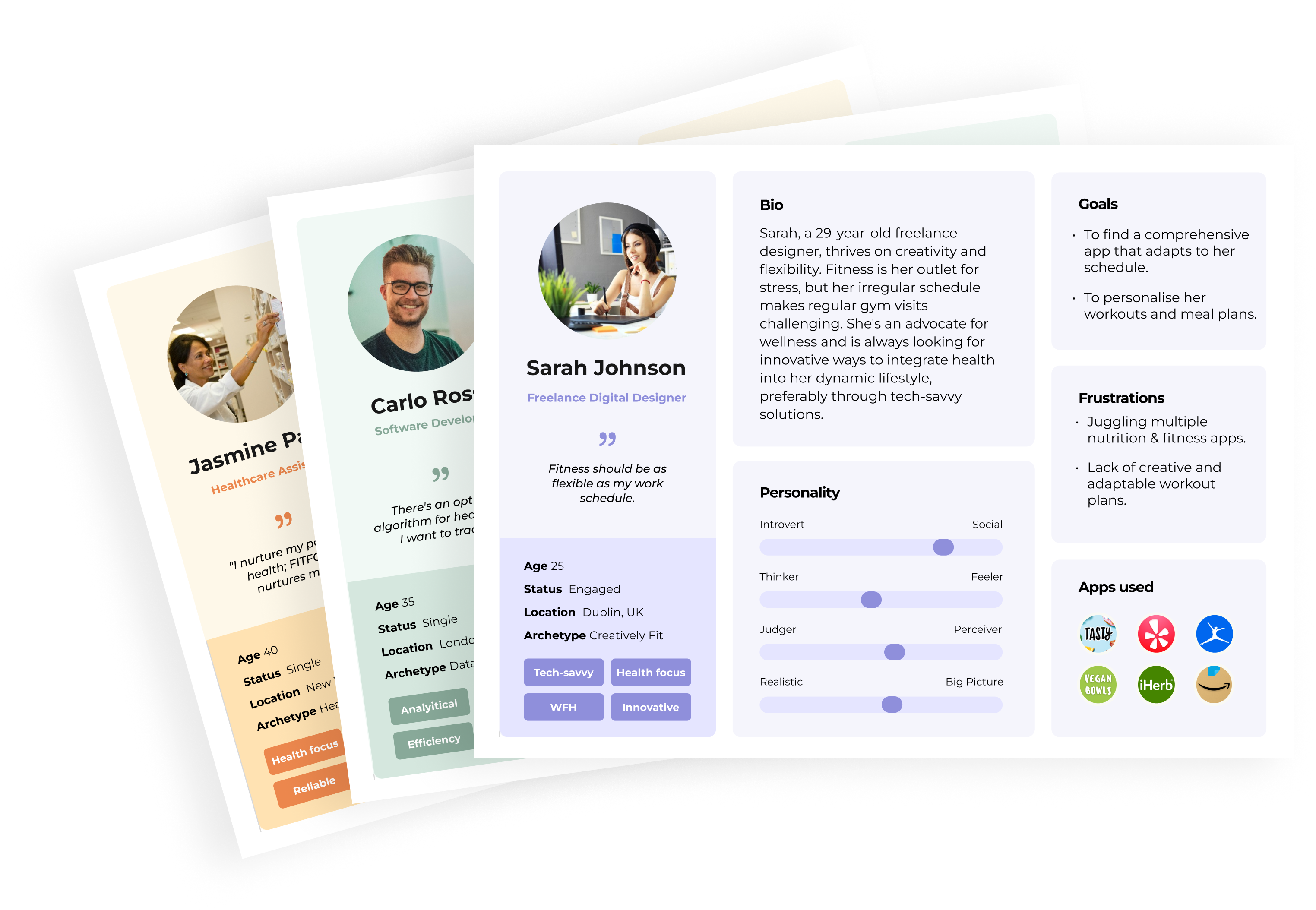
With the qualitative data collected from the market research and the user interviews, I crafted 3 user personas, detailing aspects such as age range, occupation, main characteristics, as well as goals, frustrations and app usage.
UX
User Experience Design
User Experience Design combines scientific accuracy with creativity to craft a product's functional framework. It methodically defines user interaction by planning information architecture, user flows, low and high-fidelity wireframes.
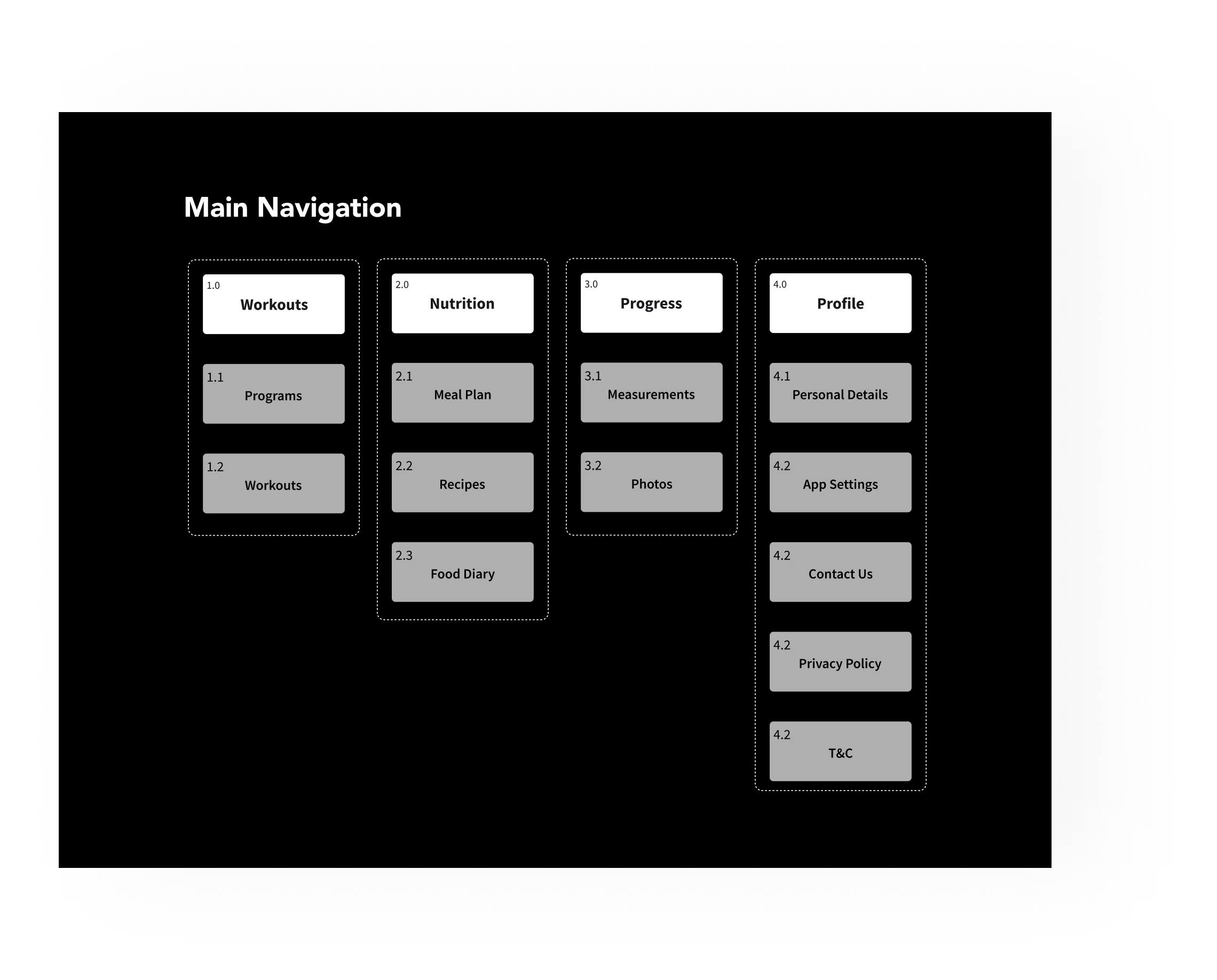
Information Architecture
Information Architecture focuses on organising, structuring, and labeling content in an effective and sustainable way. The goal is to help users find information and complete tasks efficiently. For FITFORCE, a well-planned IA ensures that users can easily navigate between workout routines, meal plans, and progress tracking without feeling overwhelmed.
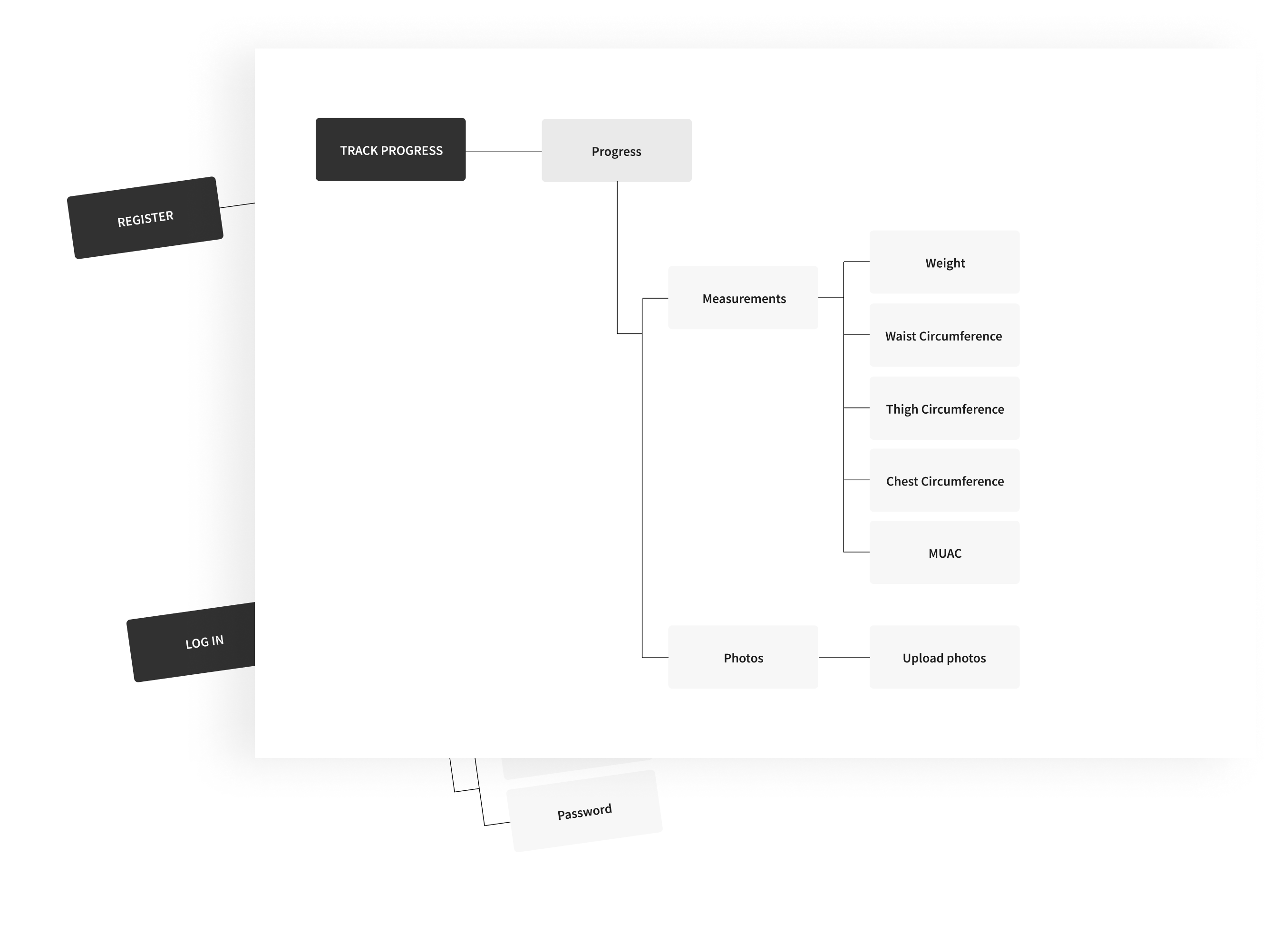
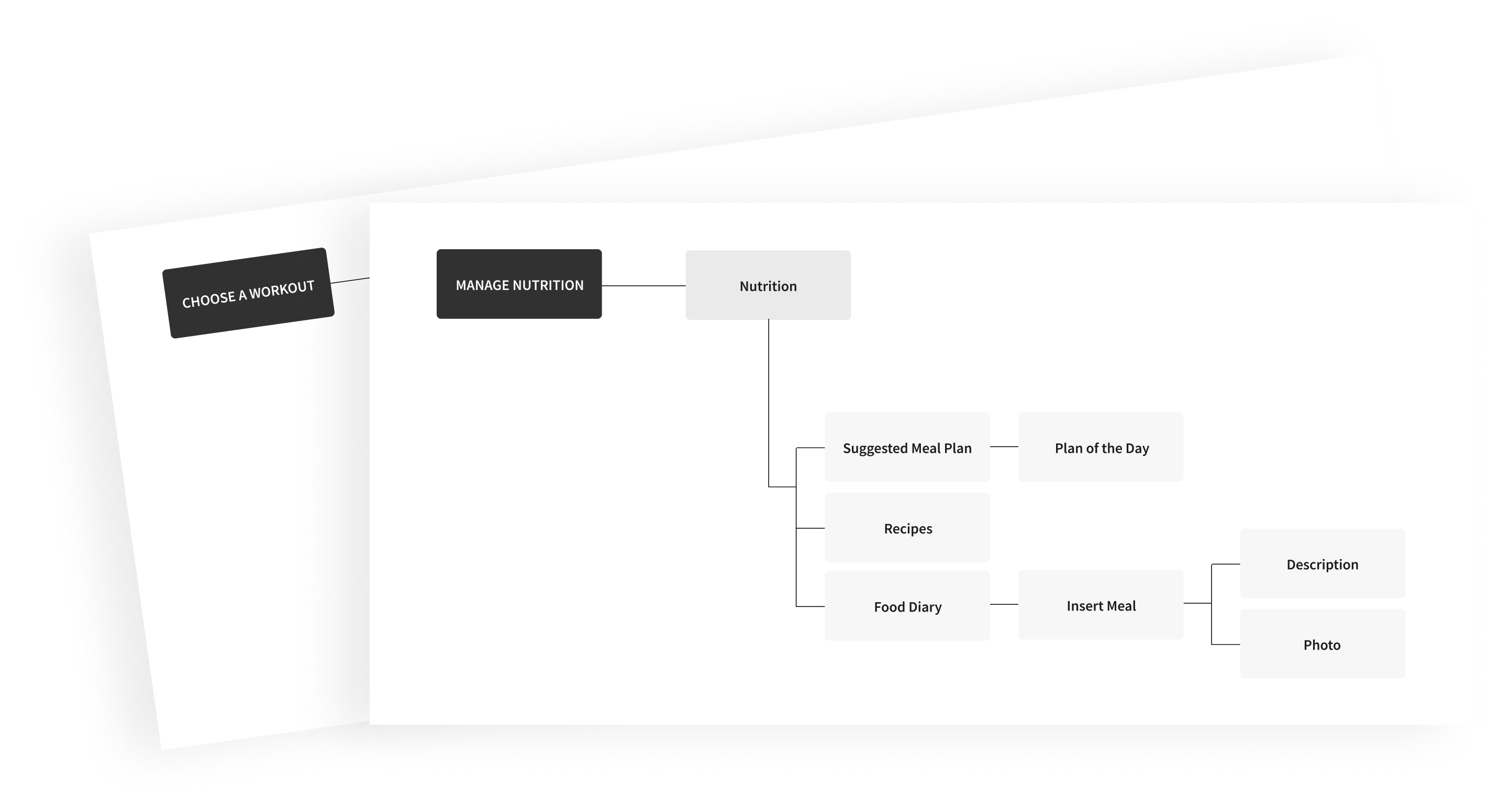
User Journey
I developed a user journey showing the routes users will take to reach specific goals on the website, to ensure a seamless navigation experience across the entire website.
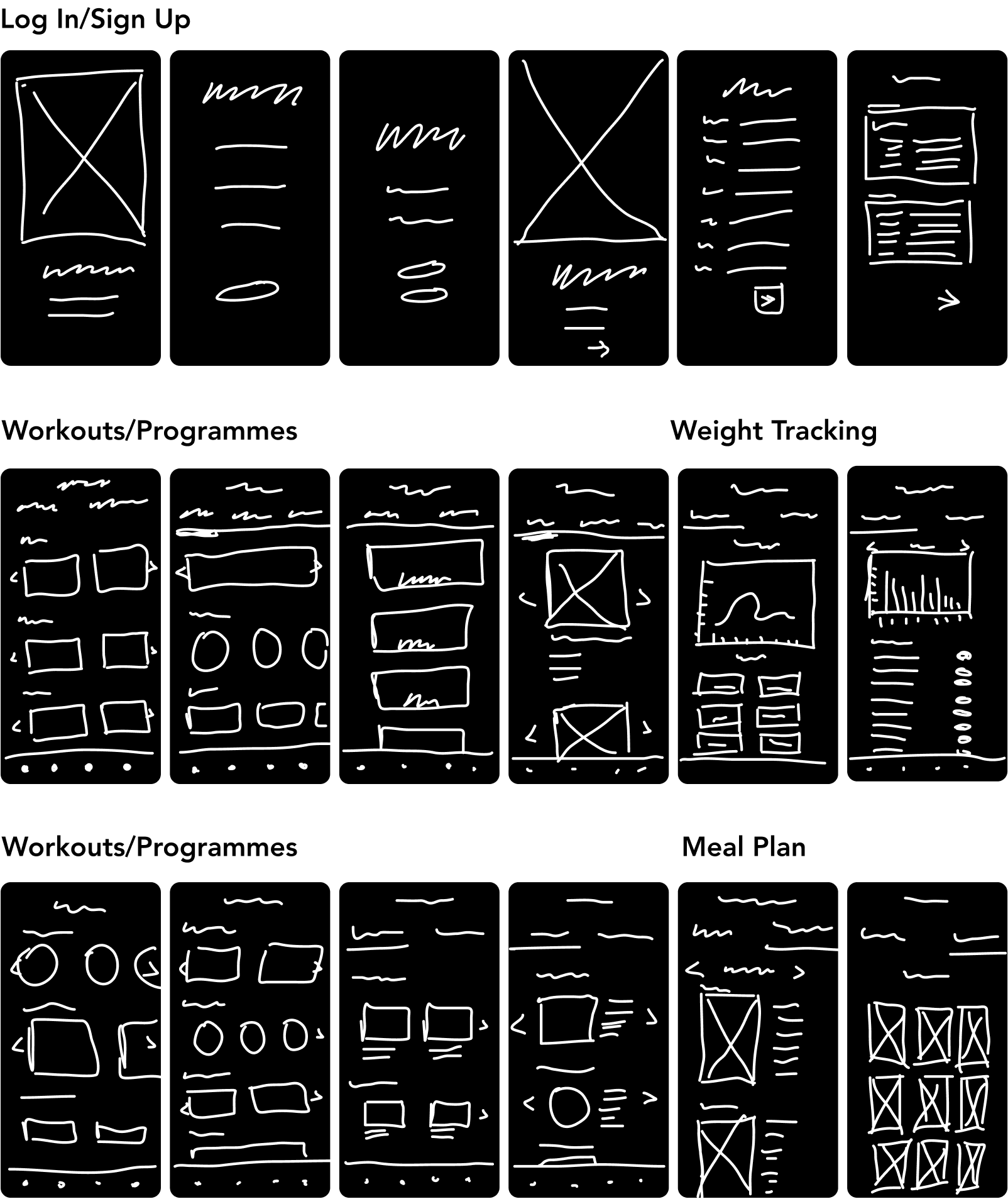
Sketches
The sketching phase allows to quickly translate ideas into visual concepts. It's a brainstorming process where multiple design solutions are explored. Sketching for FITFORCE would involve outlining the key screens and features, such as the Log In & Sign Up, the home dashboard with the workouts, the nutrition and weight tracking screens.
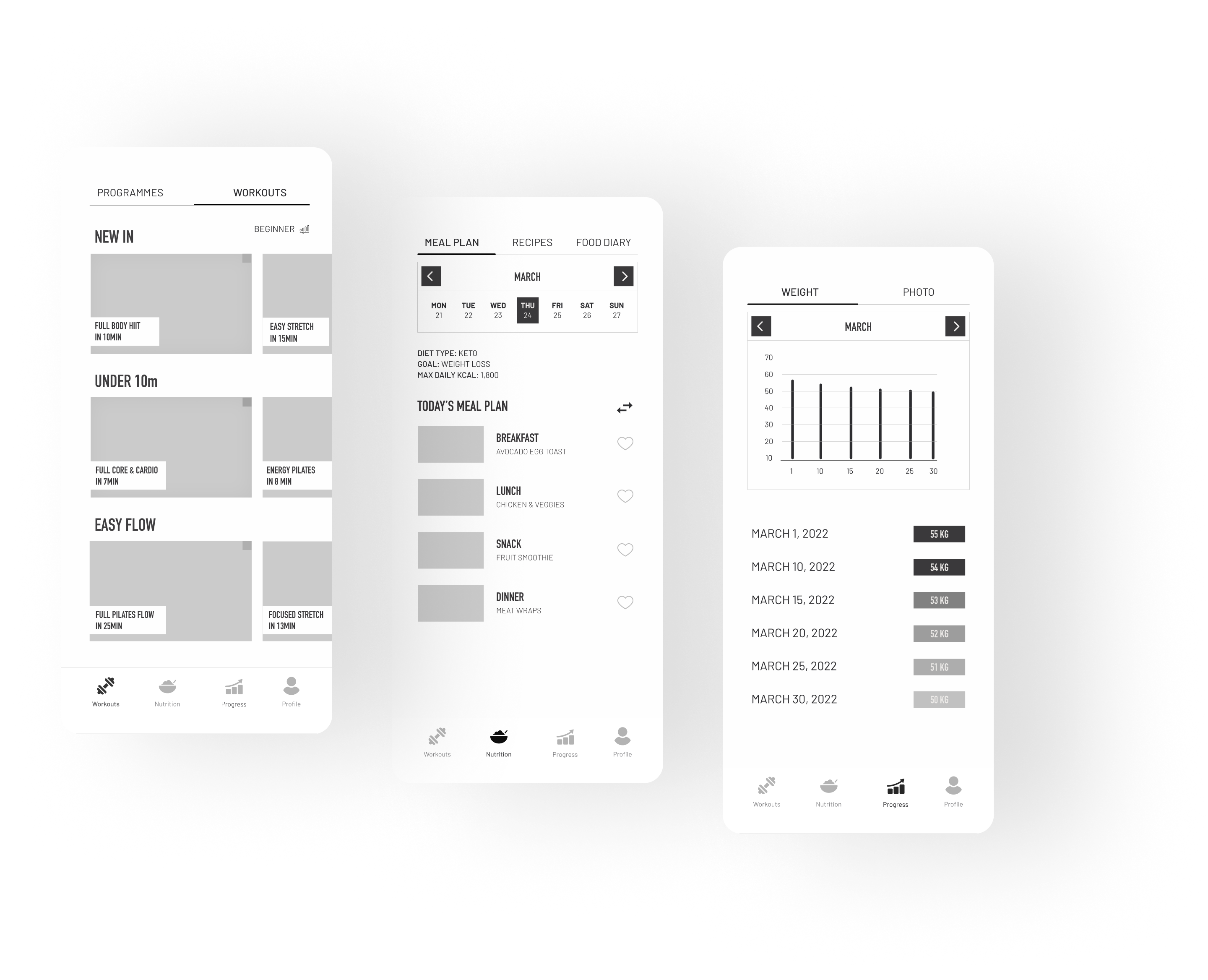
High-fidelity Wireframes
After the initial low-fidelity sketches, I advanced to creating annotated, high-fidelity wireframes. They focus on functionality and user flow, laying out where elements will be placed on the screen and how users will interact with them. For FITFORCE, wireframing is crucial for planning the layout of complex features like integrating workouts selection, tracking and nutritional guidance.
UI
User Interface Design
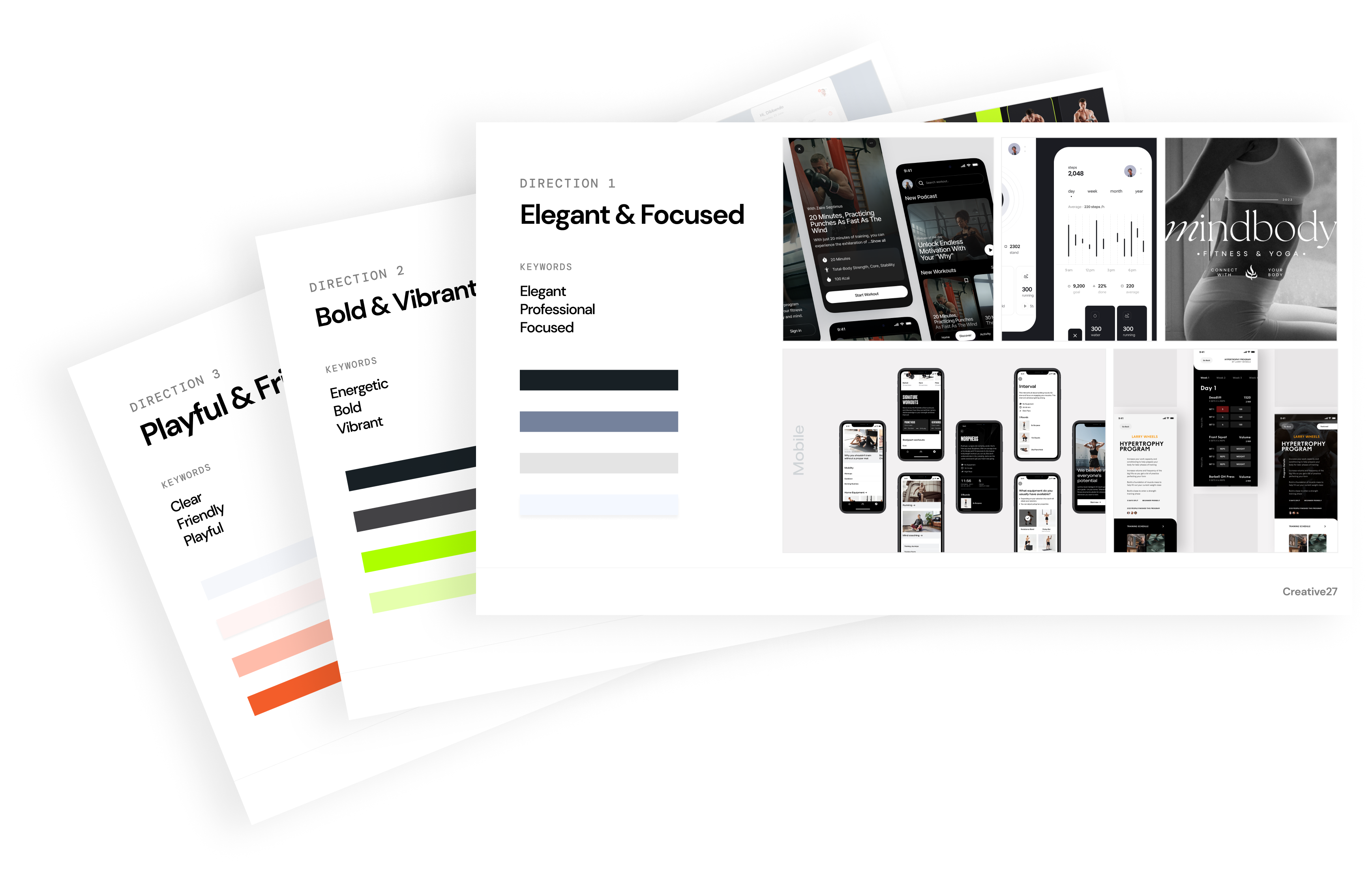
User Interface (UI) Design is the aesthetic discipline that guides the product's visual interaction with its users. It begins with the development of mood boards, which act as visual guides to establish the product's overall aesthetics.
This foundational step is crucial in developing a unified visual language, laying the groundwork for all design elements that follow.