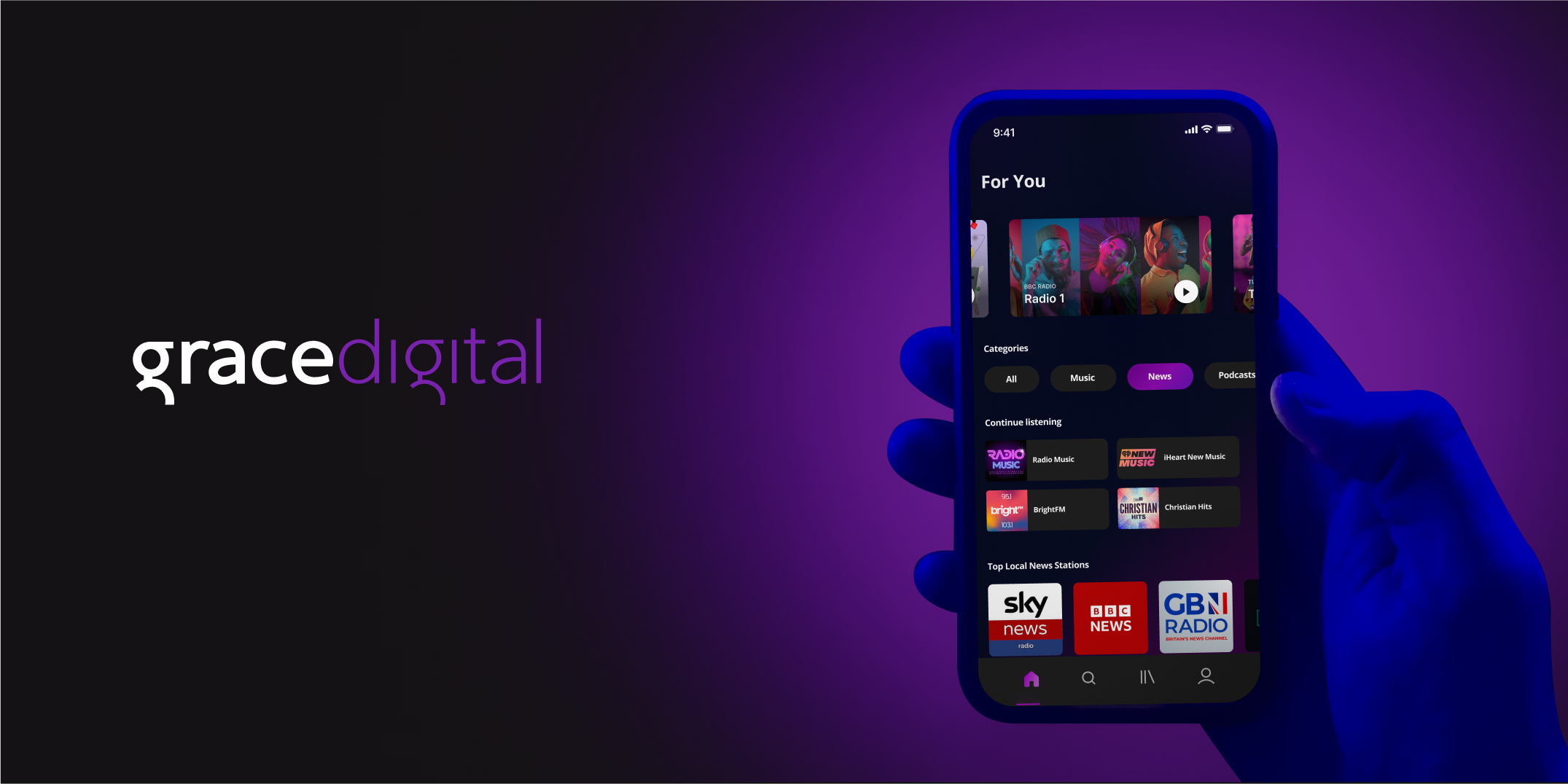
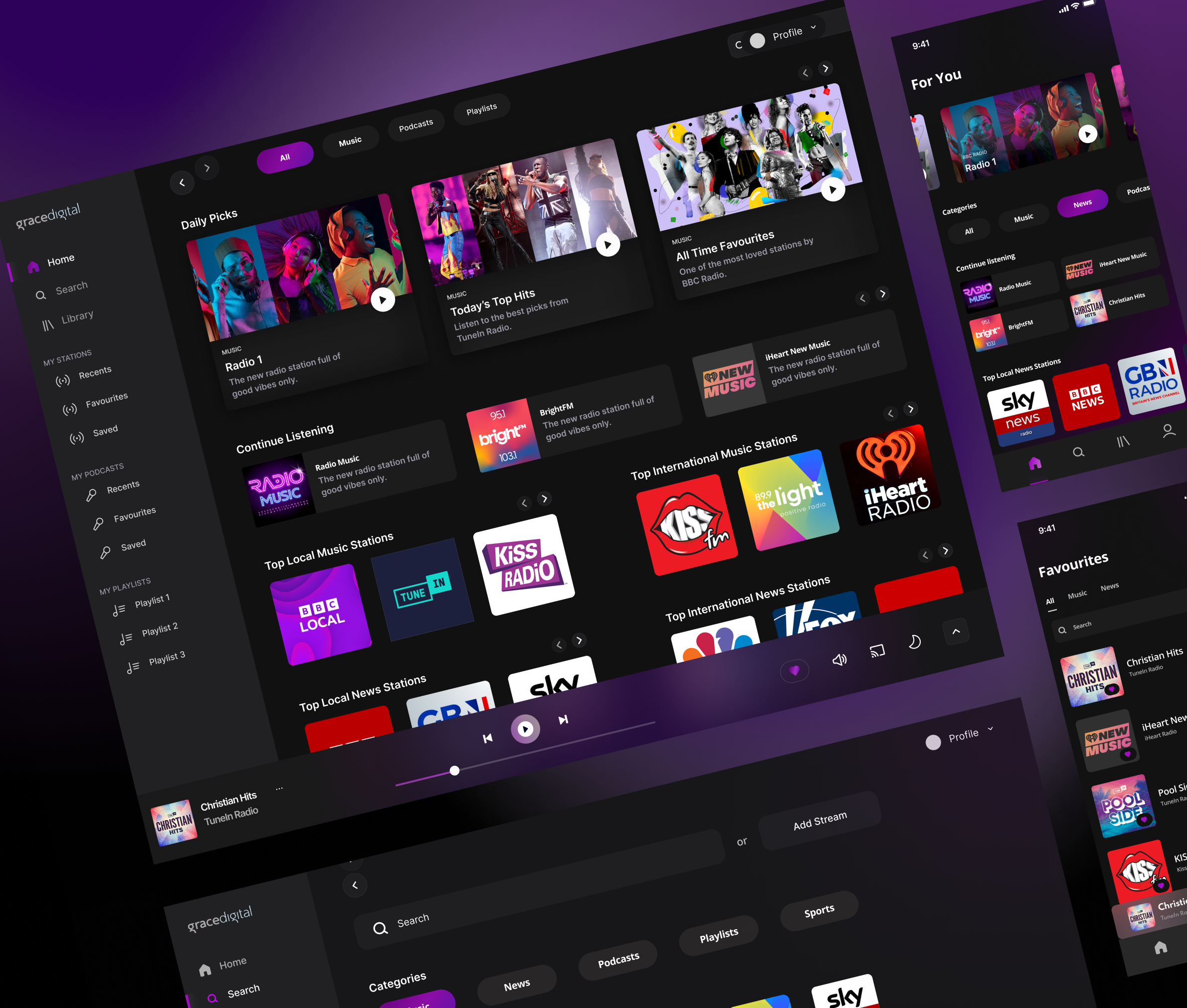
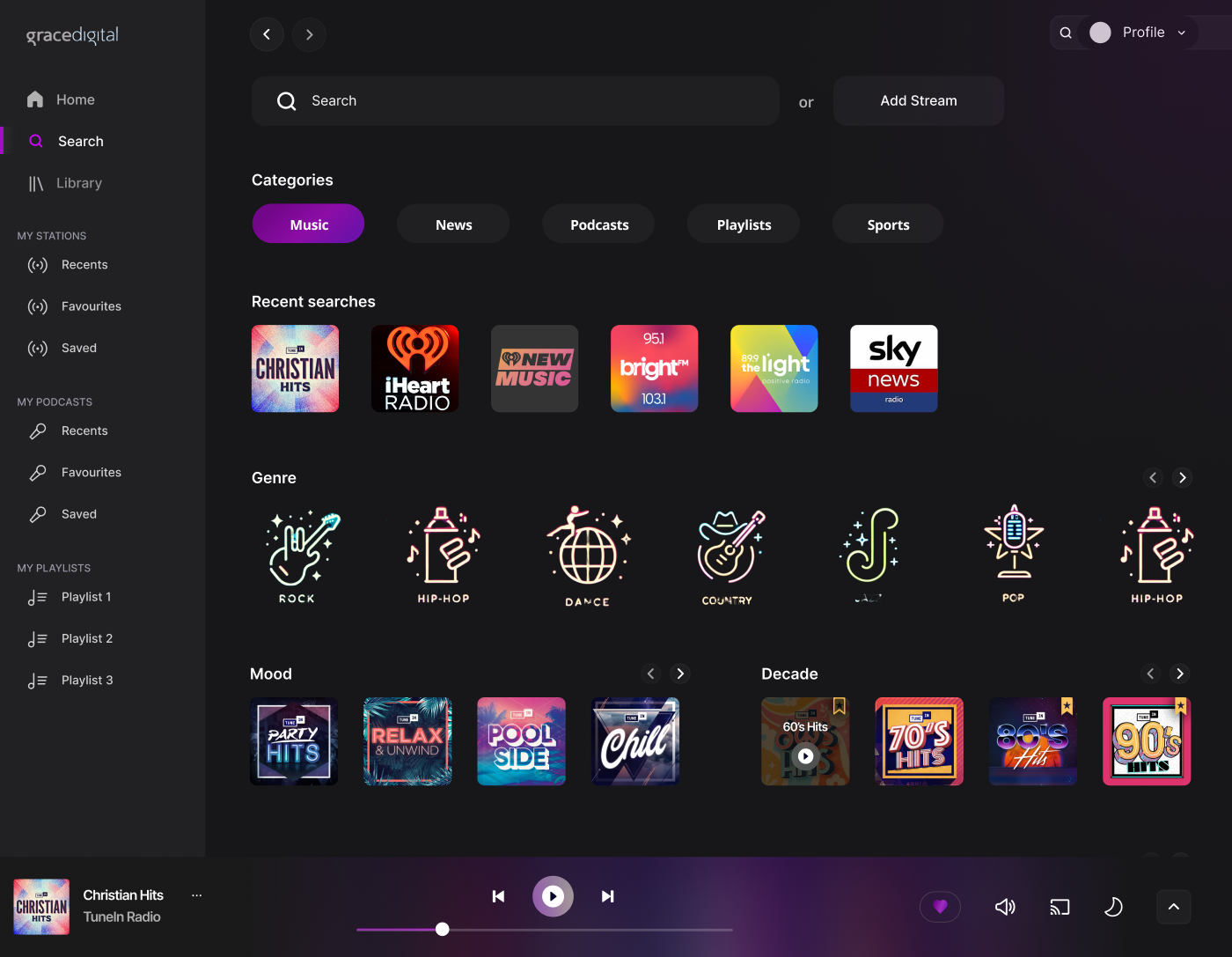
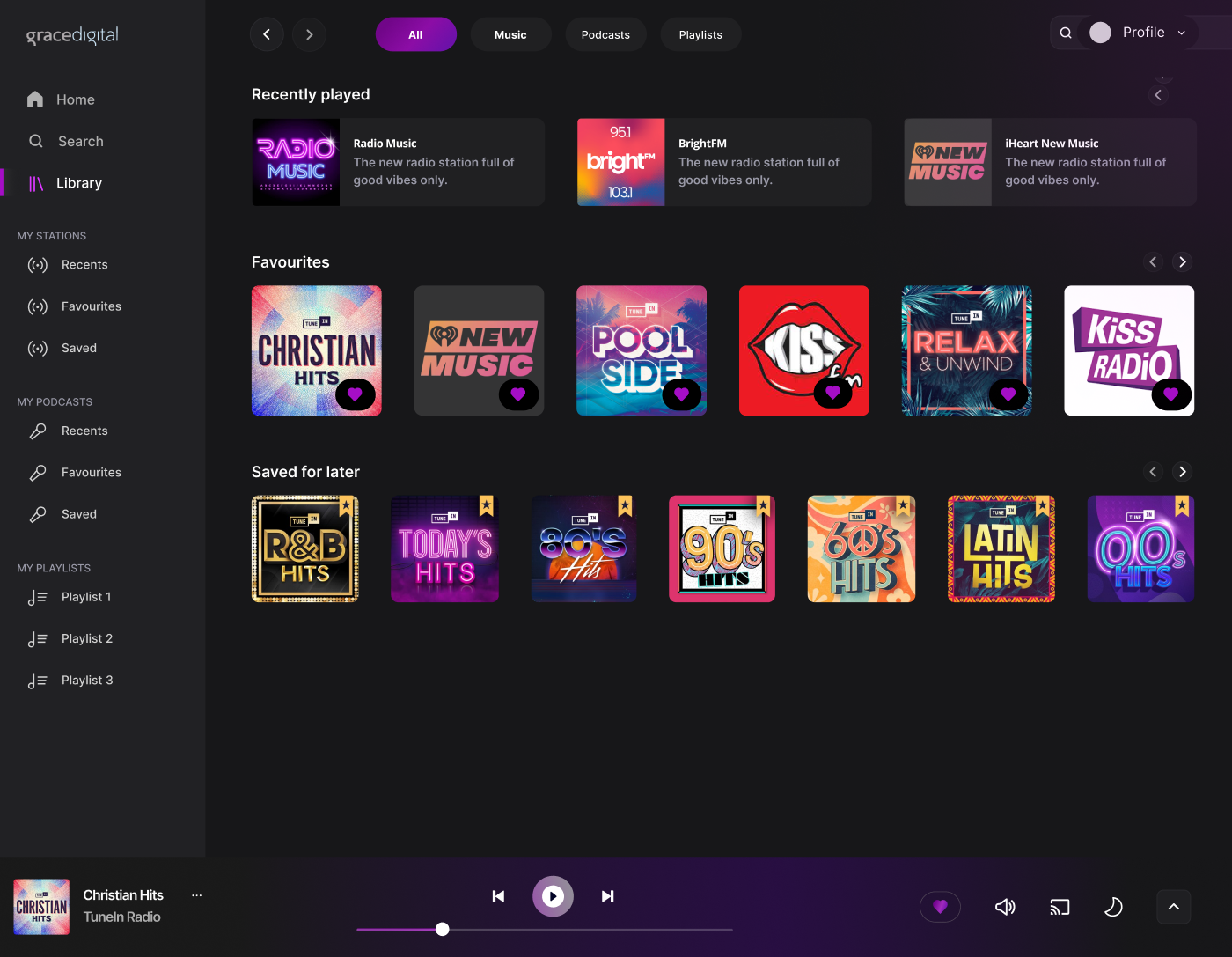
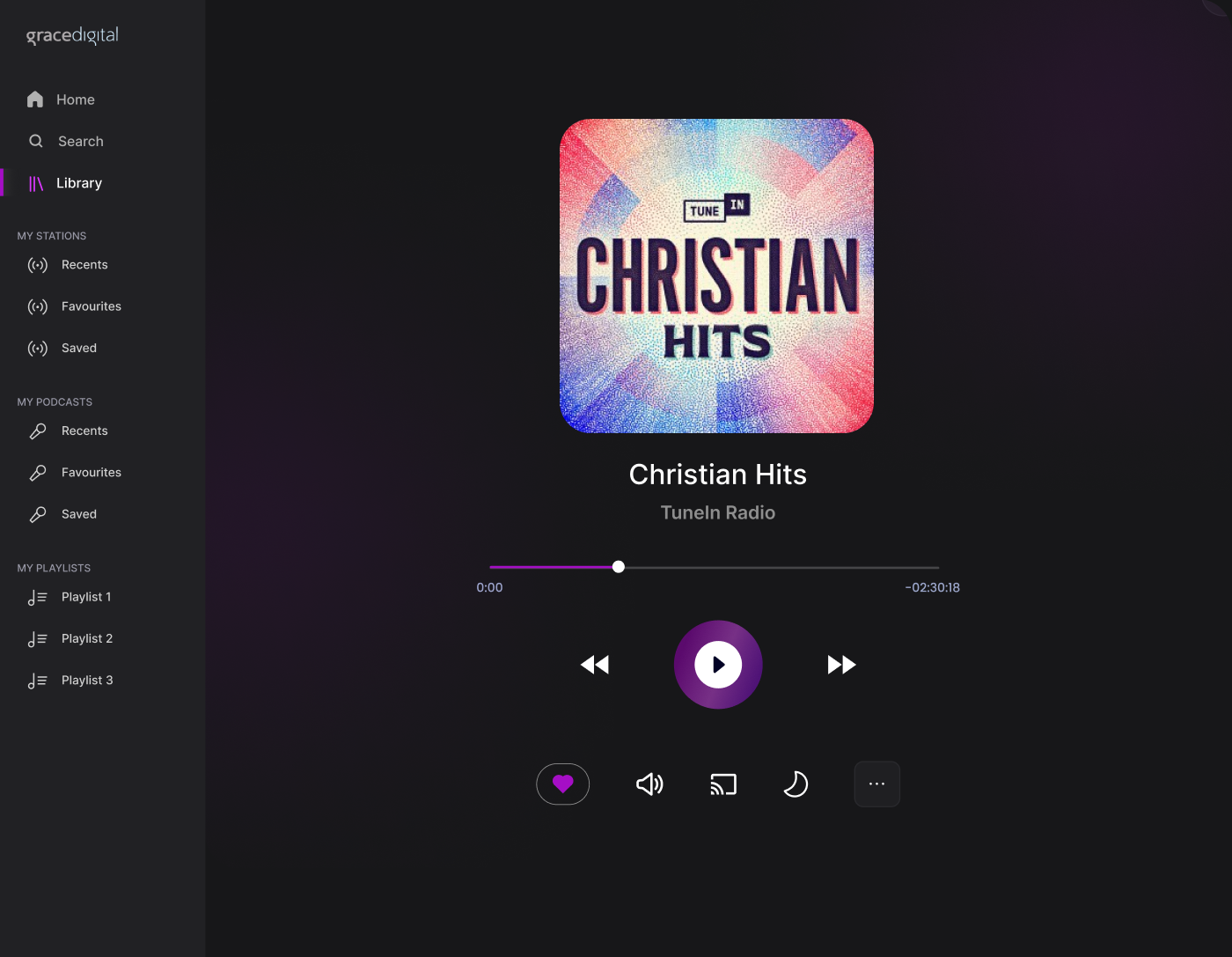
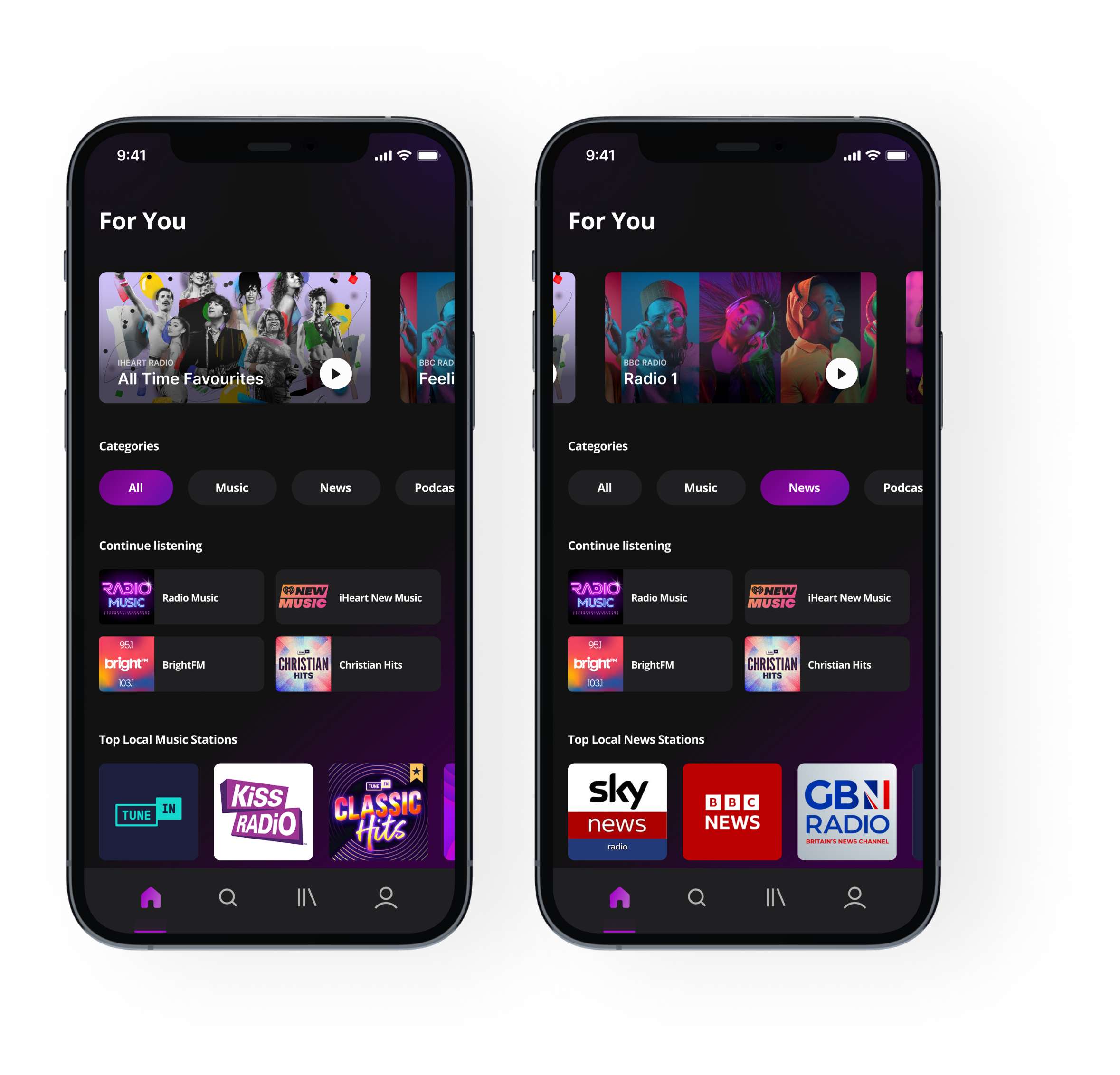
Grace Digital, renowned for its high-quality radio devices, recognized the need to overhaul its web and mobile app presence. The existing platforms were outdated, not fully meeting the modern user's expectations for functionality, design, and personalised experience.
Role
Competitive Research, UX Design, UI Design
Tools
Figma, Adobe CC, Miro, Tally, HeyCollab
The problem
The primary challenge was the outdated design and functionality of the Grace Digital Radio app. The app needed to be more intuitive, engaging, and reflective of the high-quality audio experience GraceDigital is known for.
The solution
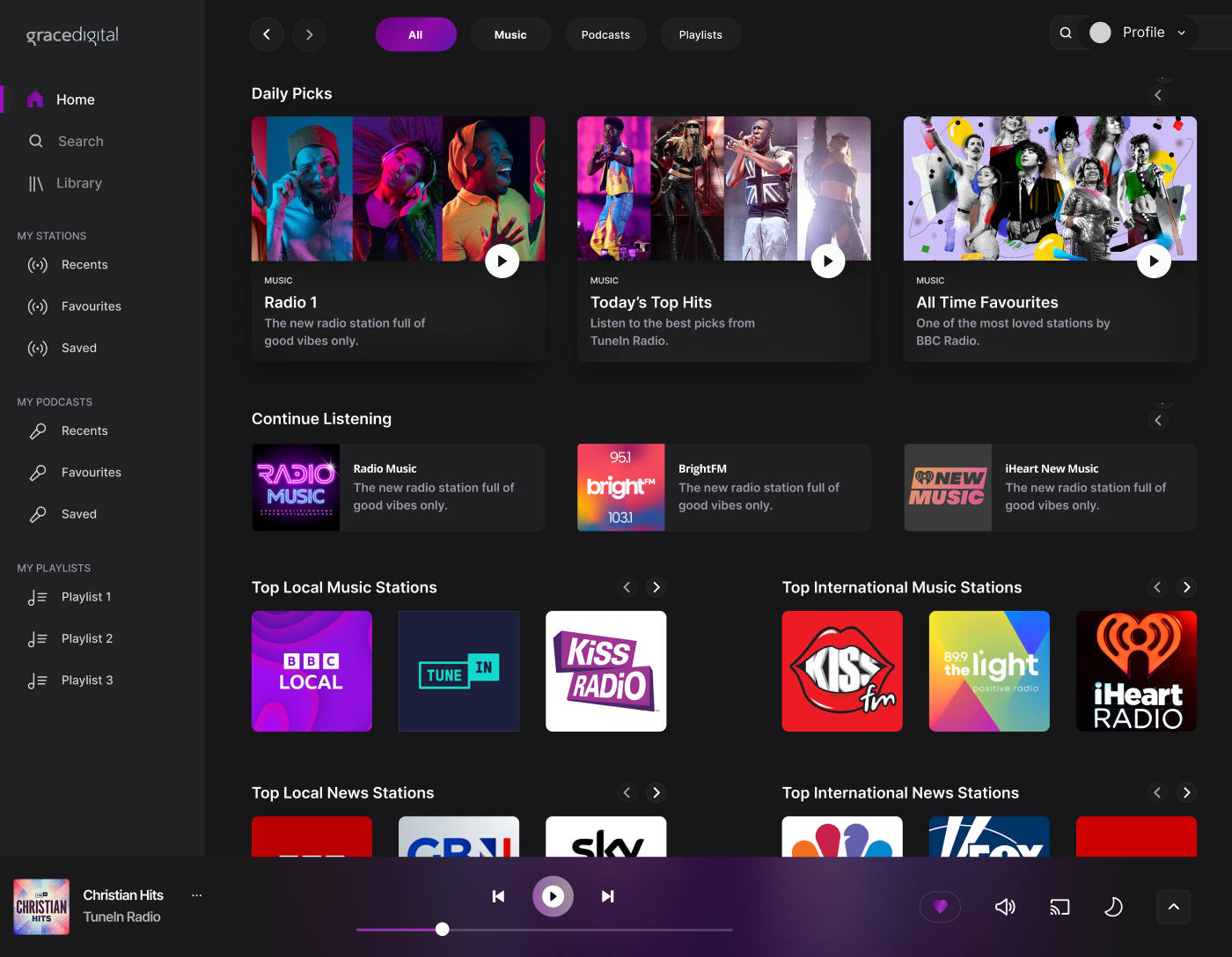
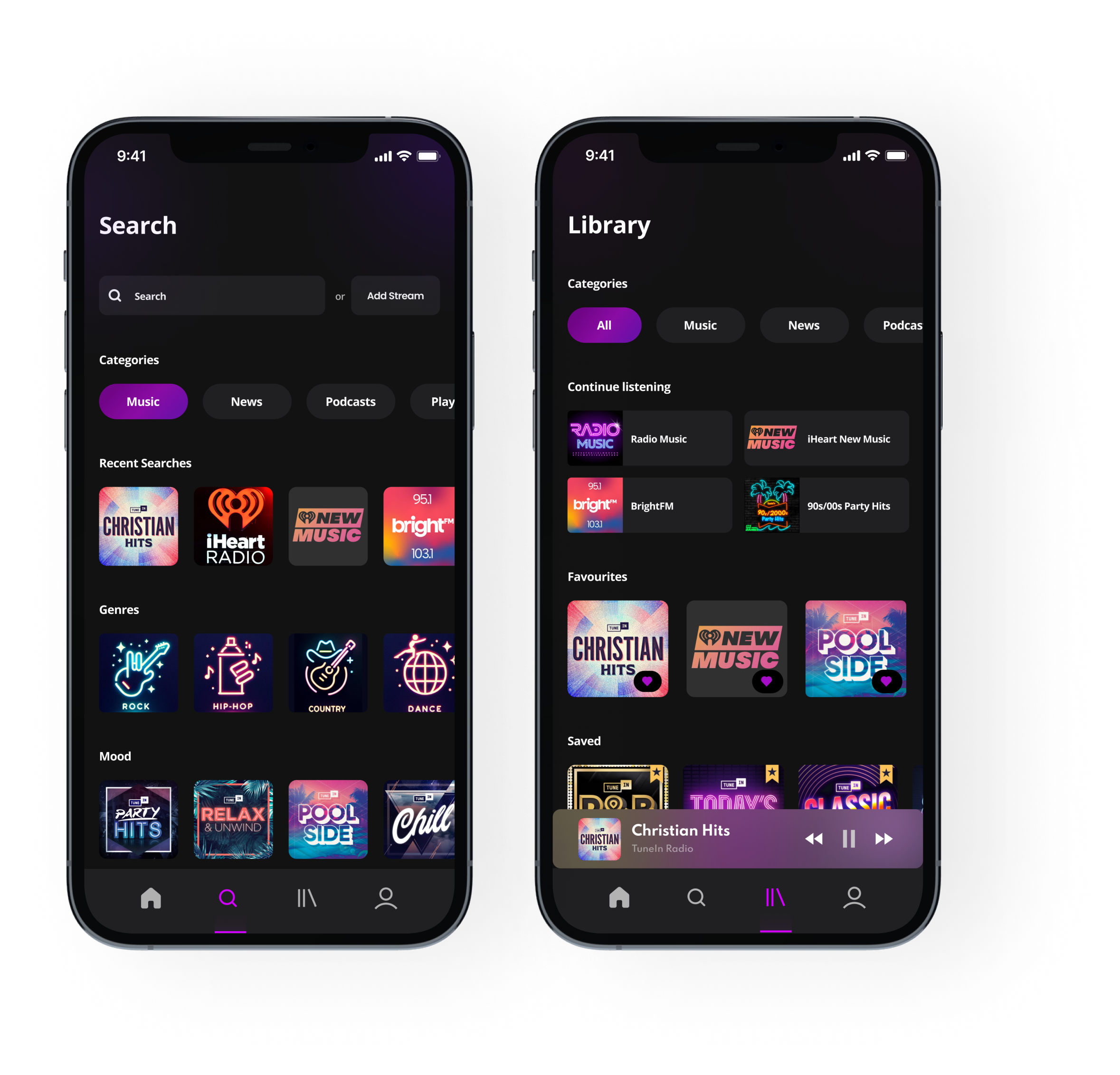
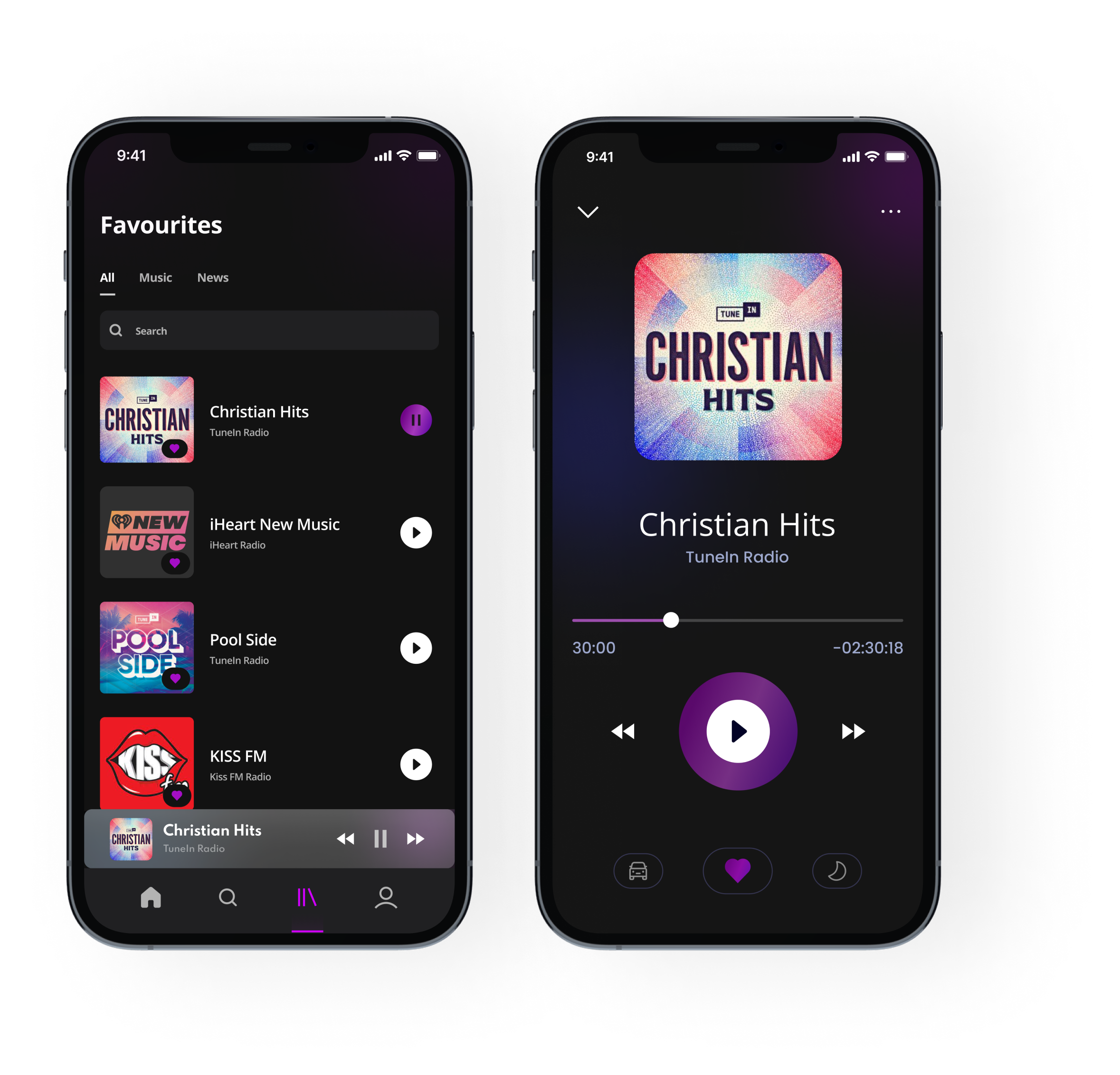
To address these challenges, the project involved a complete redesign of the Grace Digital Radio app for both web and mobile. This redesign focused on enhancing user experience through improved navigation, personalised content delivery, and a modern, visually appealing interface.
The Process
The Research
Competitive Analysis
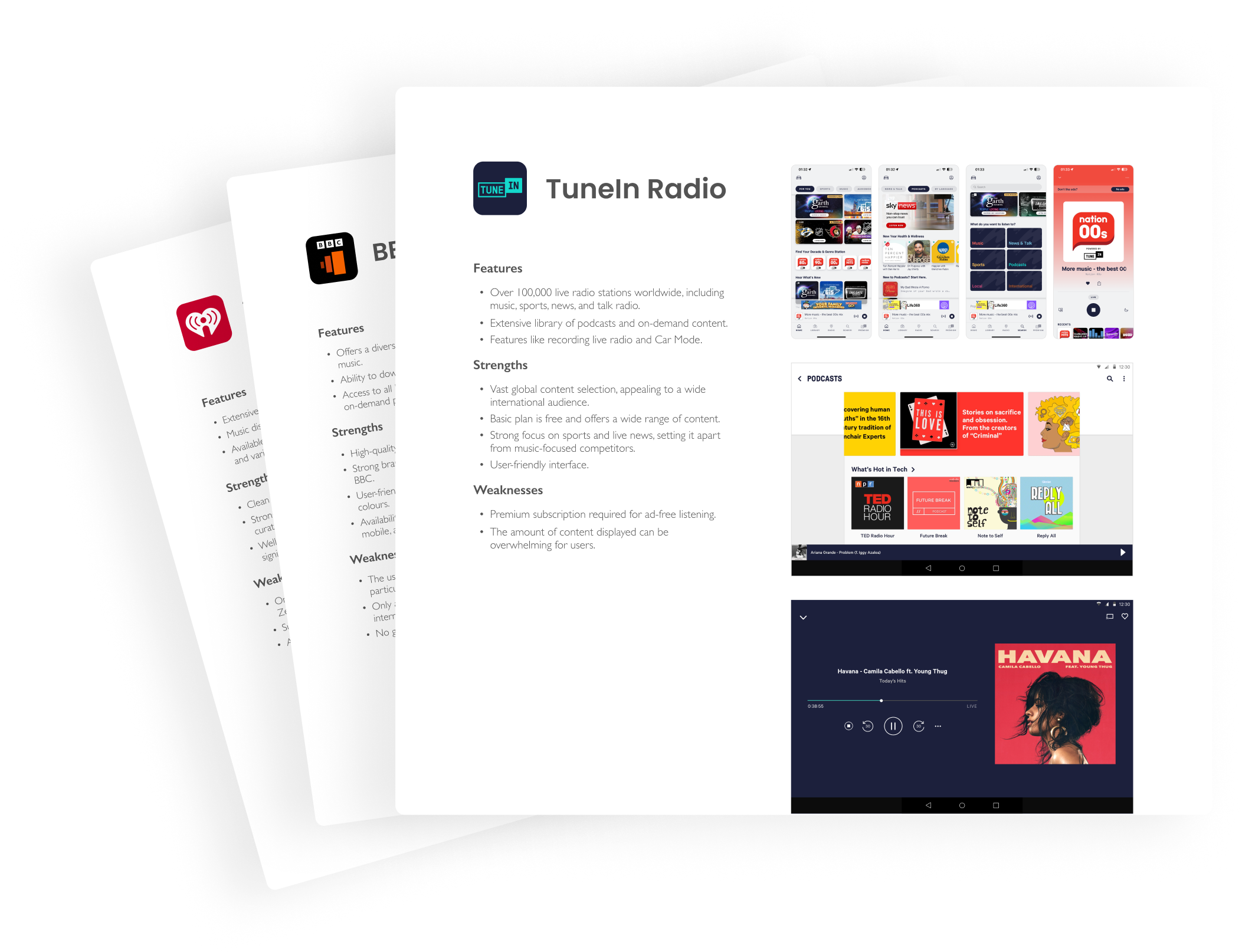
I conducted a competitive research to examine some of the key players in the internet radio industry, such as iHeart, BBS Sounds and TuneIn Radio.
I downloaded and used each app to fully immerge myself in their radio listening experience, focusing on their features, strengths and shortcomings to inform my approach to Grace Digital competitive positioning.
Qualitative Analysis
This phase was vital in understanding the preferences, habits, and frustrations of the target user base. We decided to conduct comprehensive online surveys designed to capture user satisfaction with the current app, any desired features, listening habits and the overall user interface experience.
Key Insights
The common themes and demands identified included:
A more intuitive and user-friendly interface.
Better personalisation features and recommendations.
Easier content discovery mechanisms.
Easier navigation and integration of devices.
Empathy Map
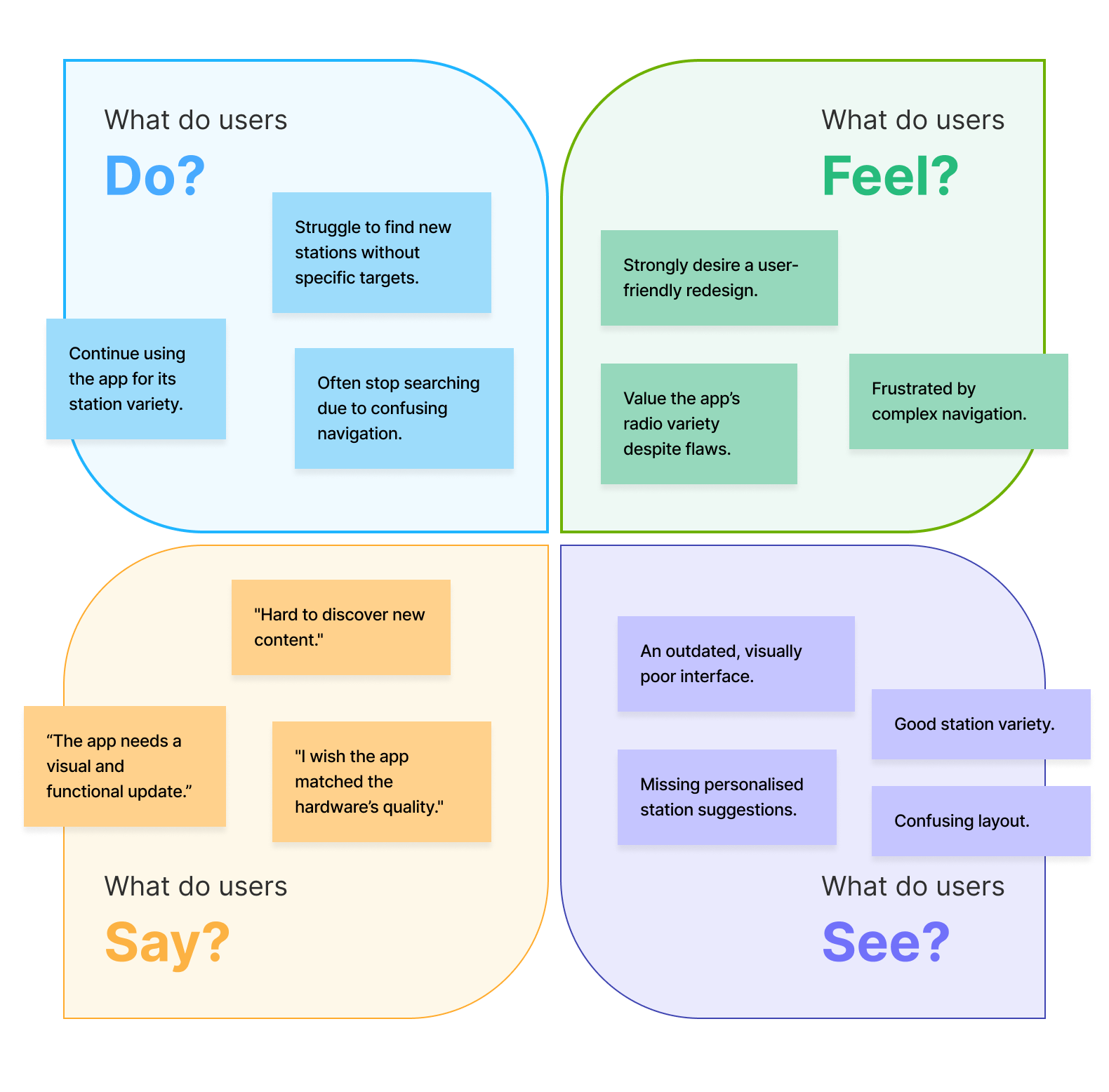
With the qualitative data collected from user surveys, I developed an empathy map to detect recurring themes among users and systematically organise them in 4 categories.
User Personas
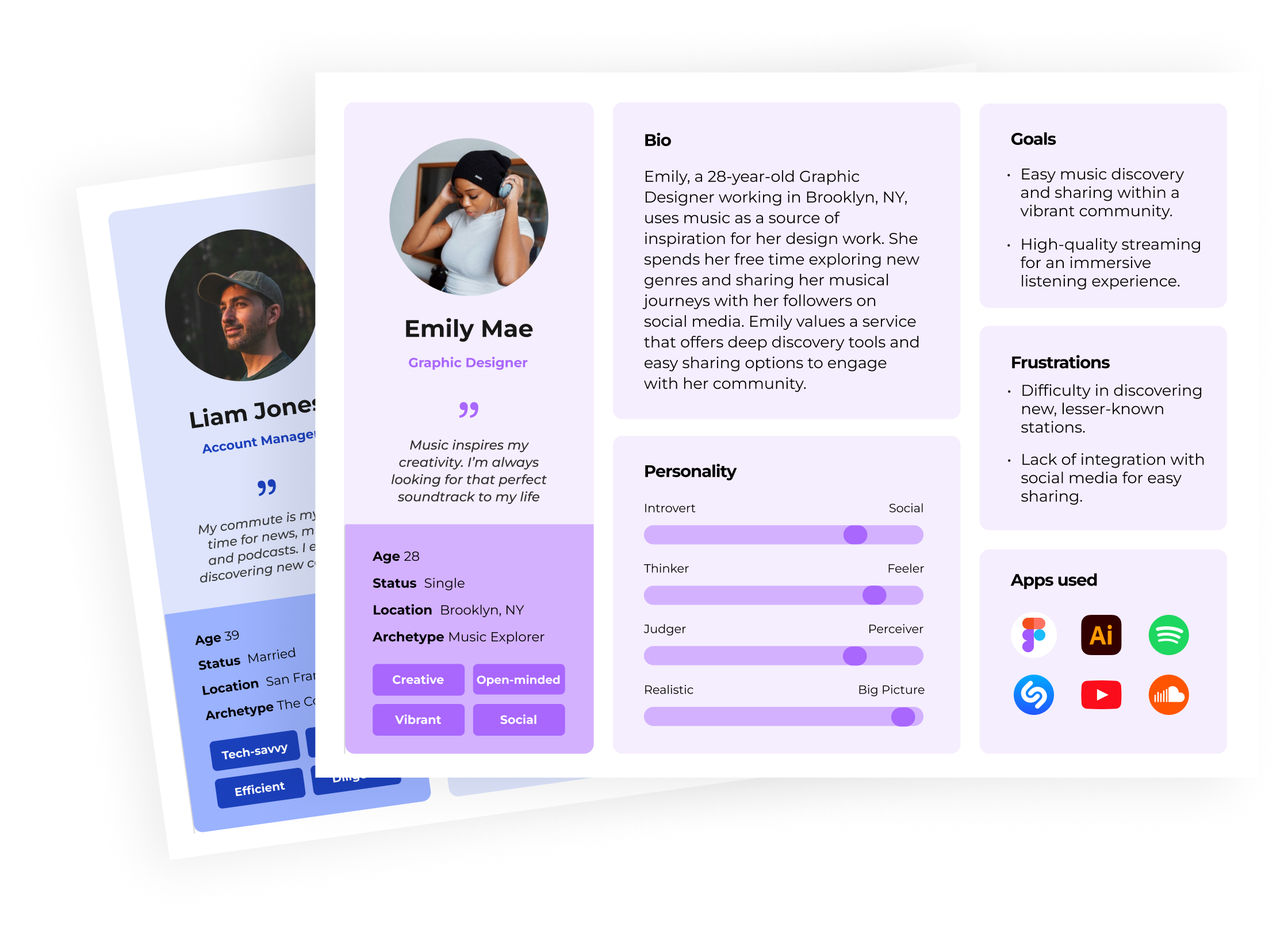
Additionally, I crafted 2 user personas to represent the target audience, detailing aspects such as age, occupation, interests, personality traits, goals and frustrations.
UX
User Experience Design
User Experience Design combines scientific accuracy with creativity to craft a product's functional framework. It methodically defines user interaction by planning information architecture, user flows, low and high-fidelity wireframes.
Information Architecture
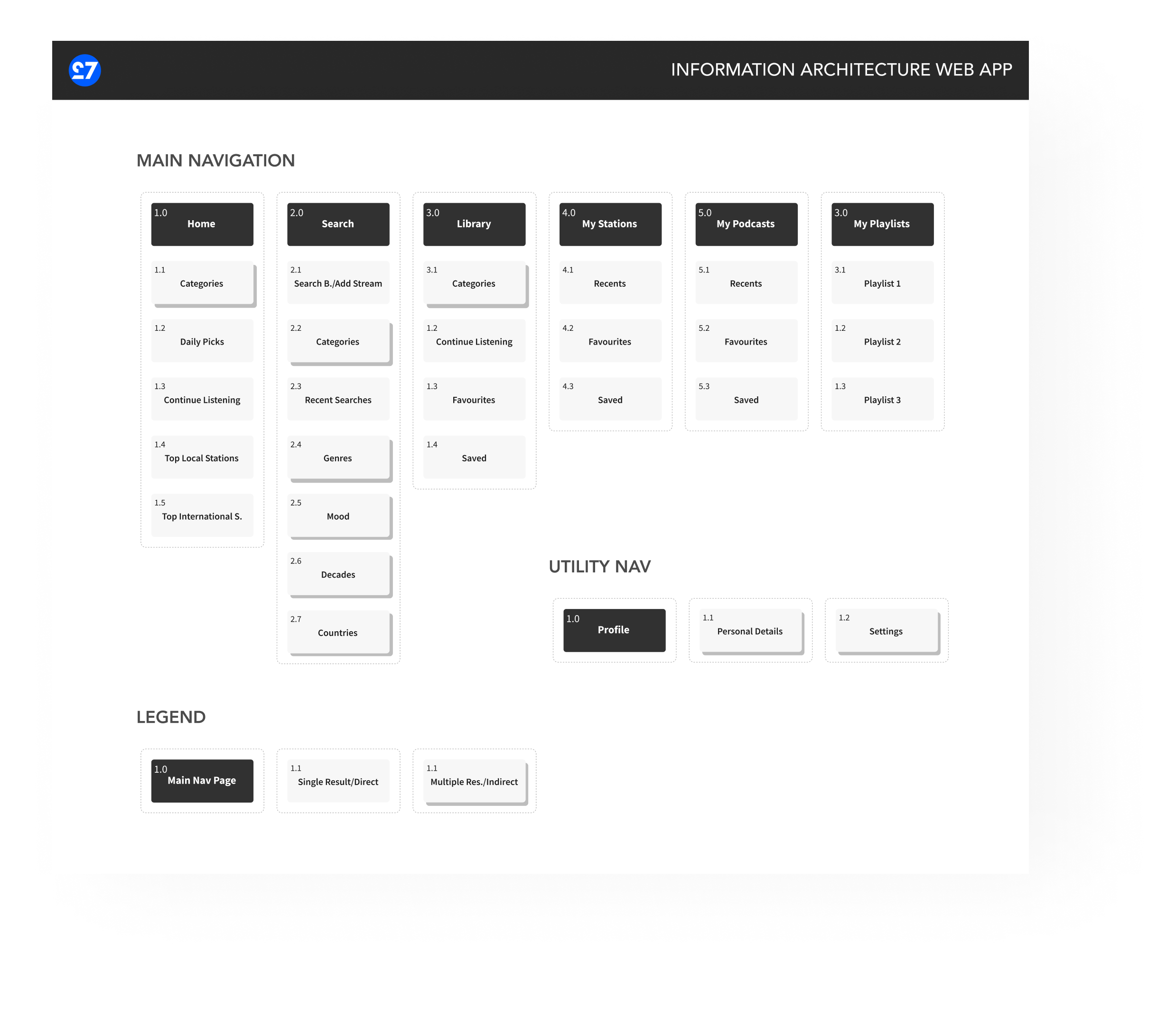
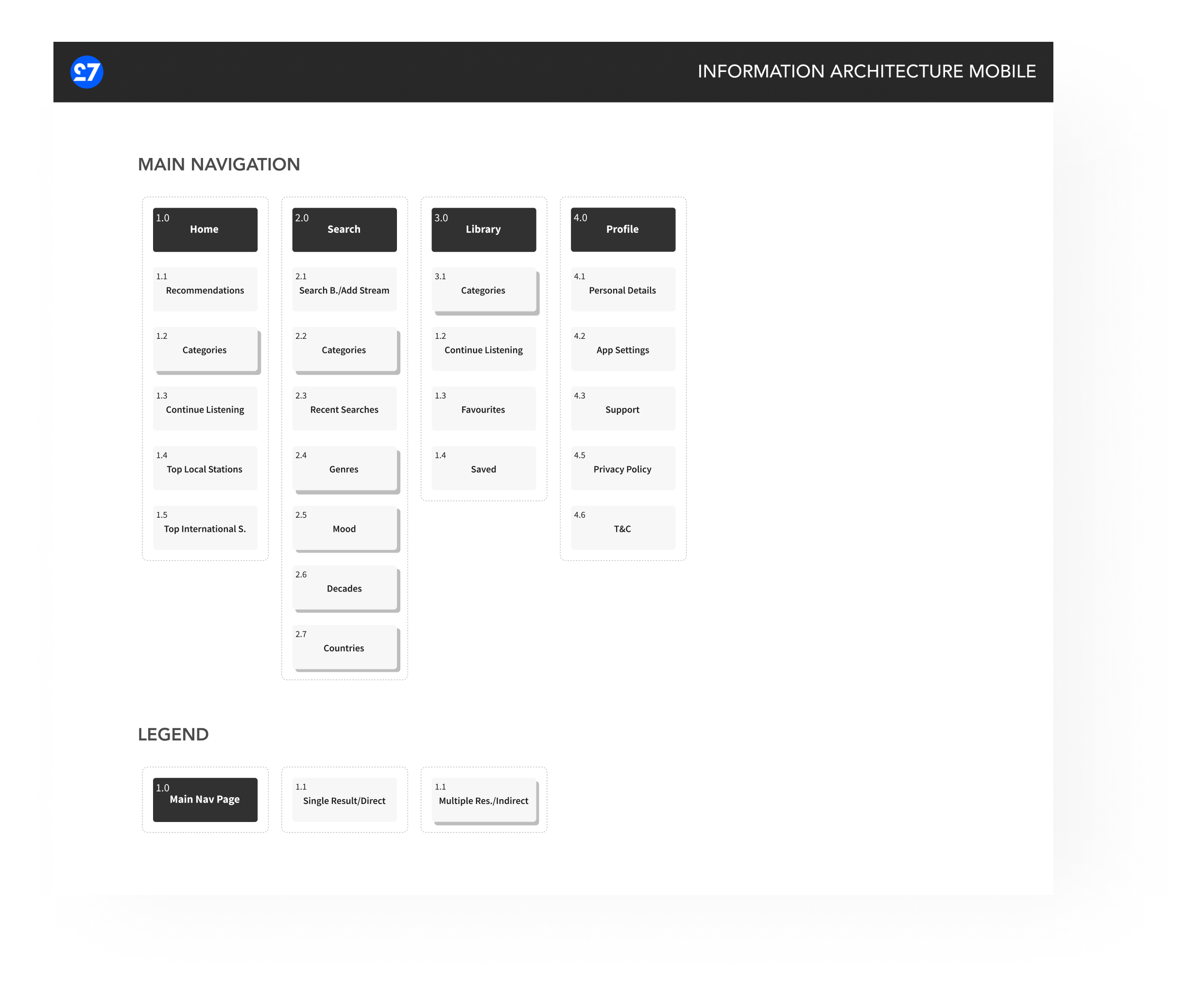
Users have mentioned the lack of intuitiveness in navigation, so I developed a site map to show the structure of a new menu, with a focus on simplicity and efficiency allowing for an easy navigation through the app's features.
Sketches & Wireframes
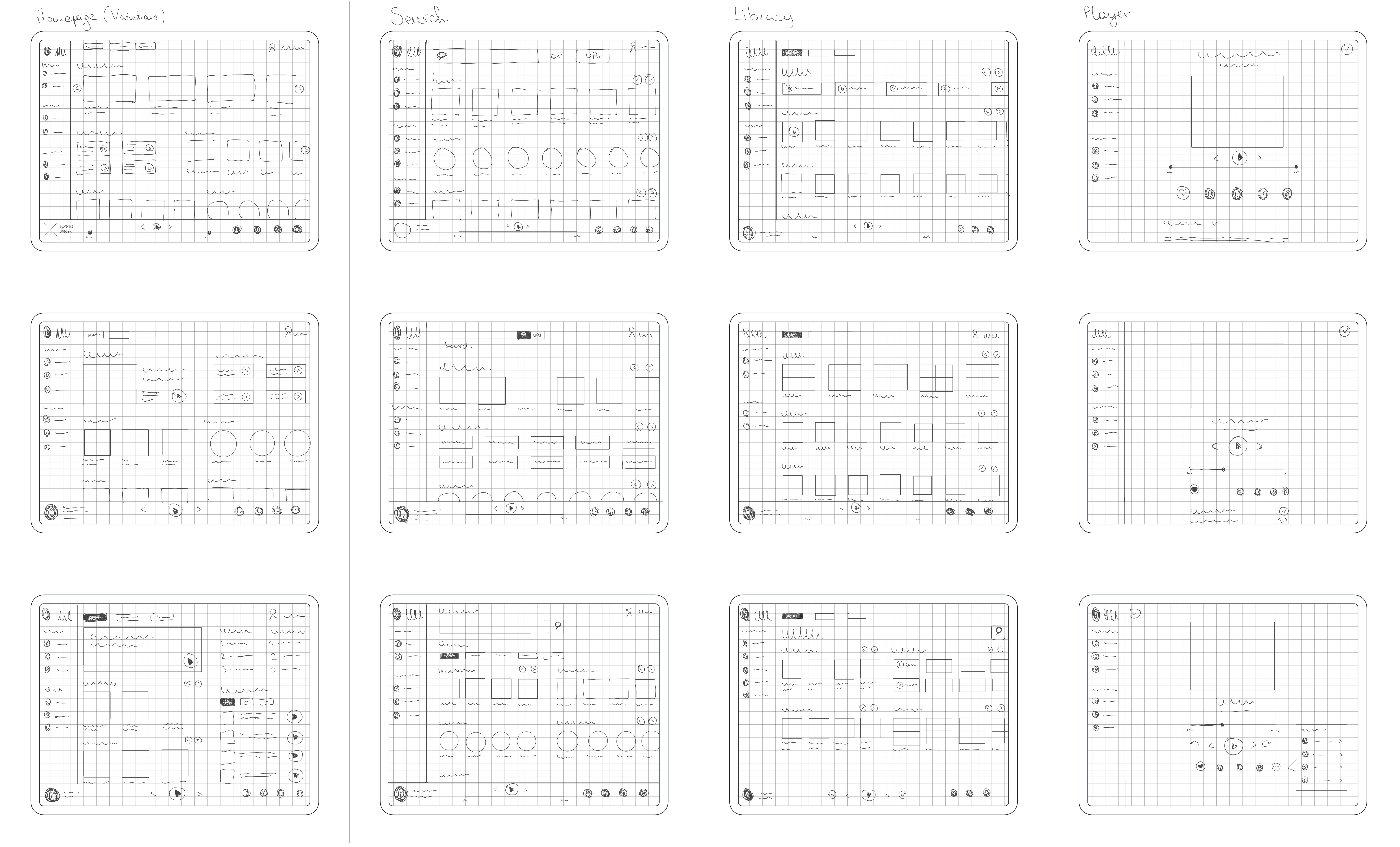
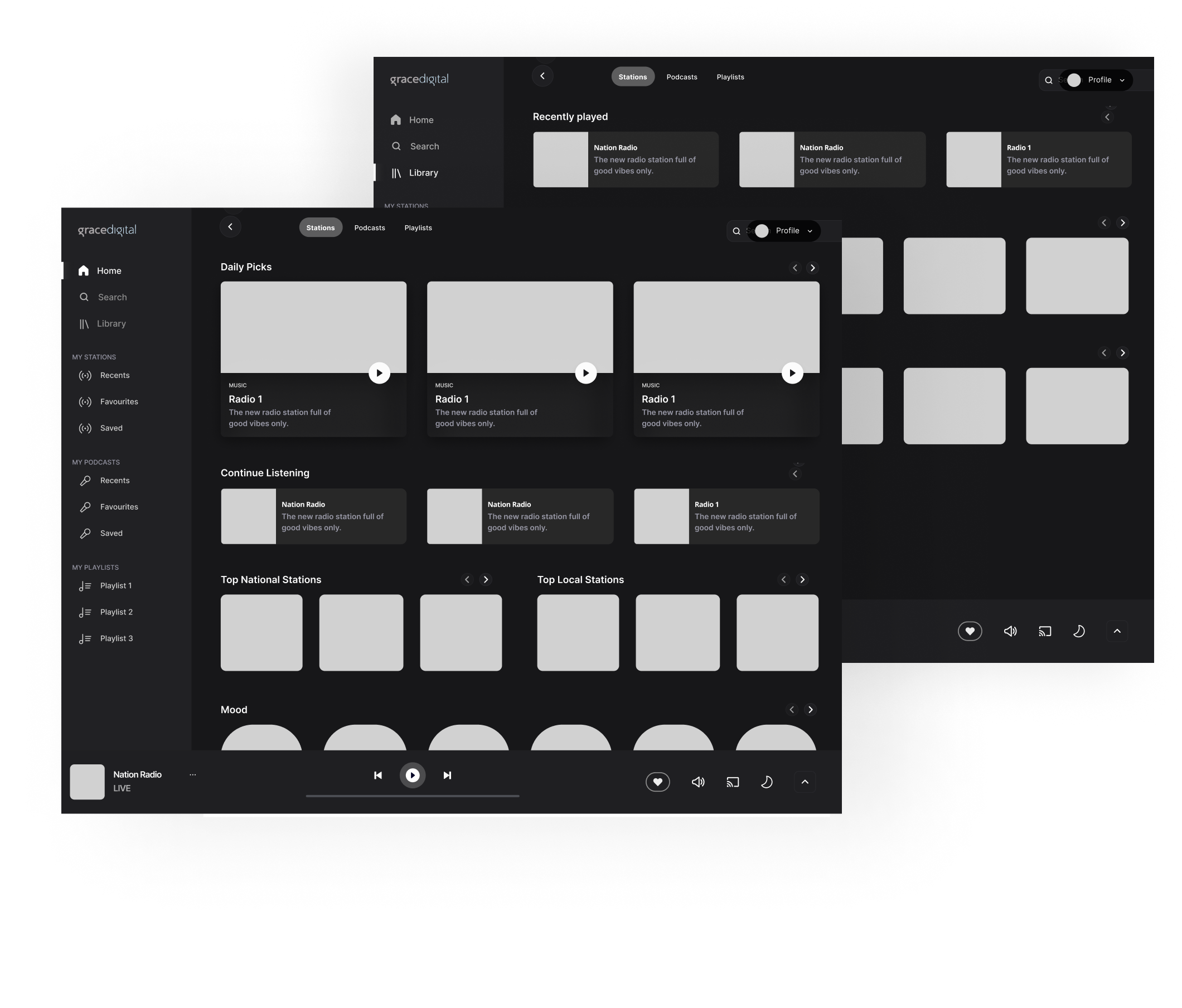
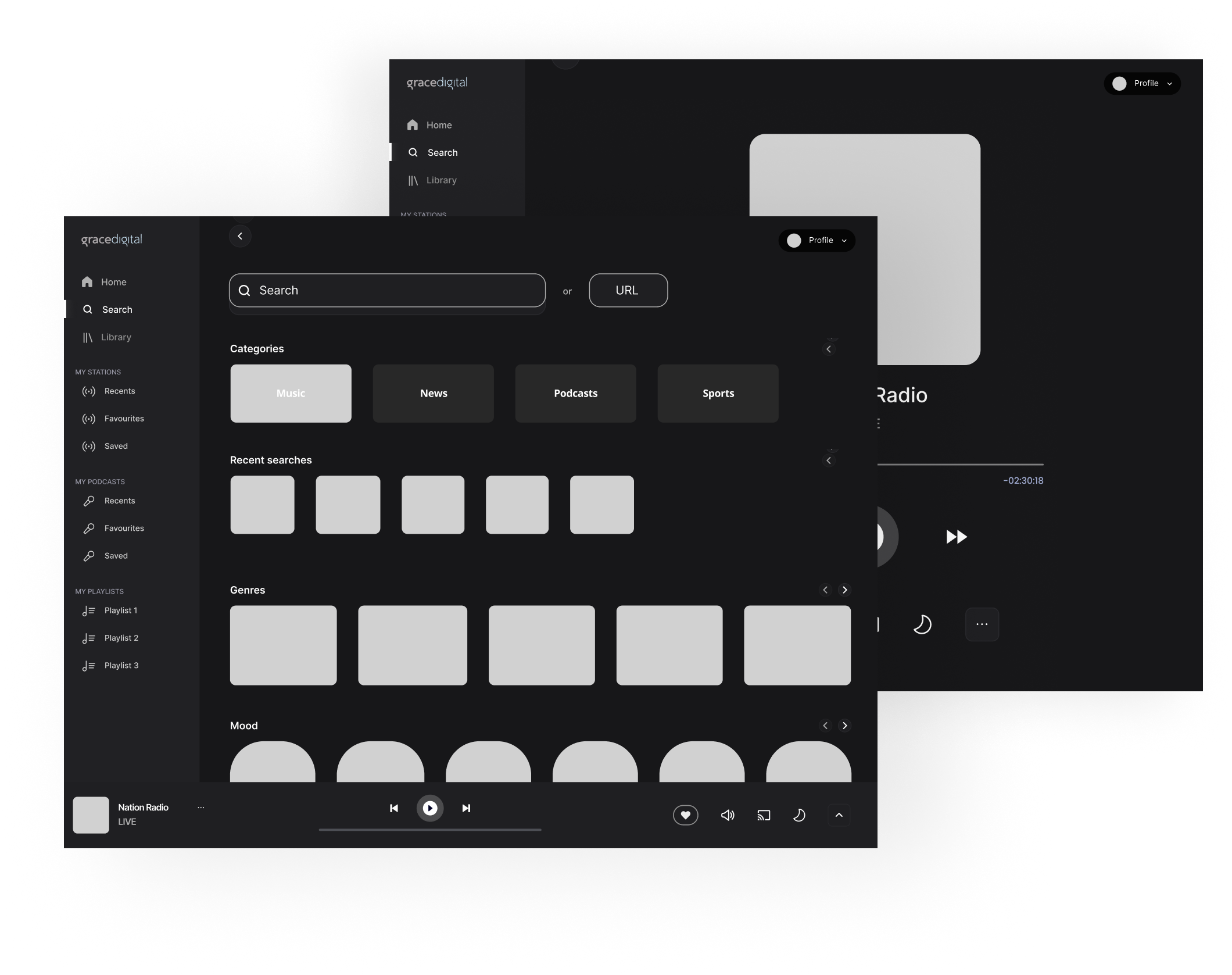
Low-fidelity wireframes facilitate quick iterations to examine the product's structure and functional approach. At this phase, the focus is on refining the core mechanics, setting aside visual elements such as colour, imagery, or illustrations.
The next phase involves creating detailed black-and-white digital layouts that provide a comprehensive blueprint of the product's structure.
UI
User Interface Design
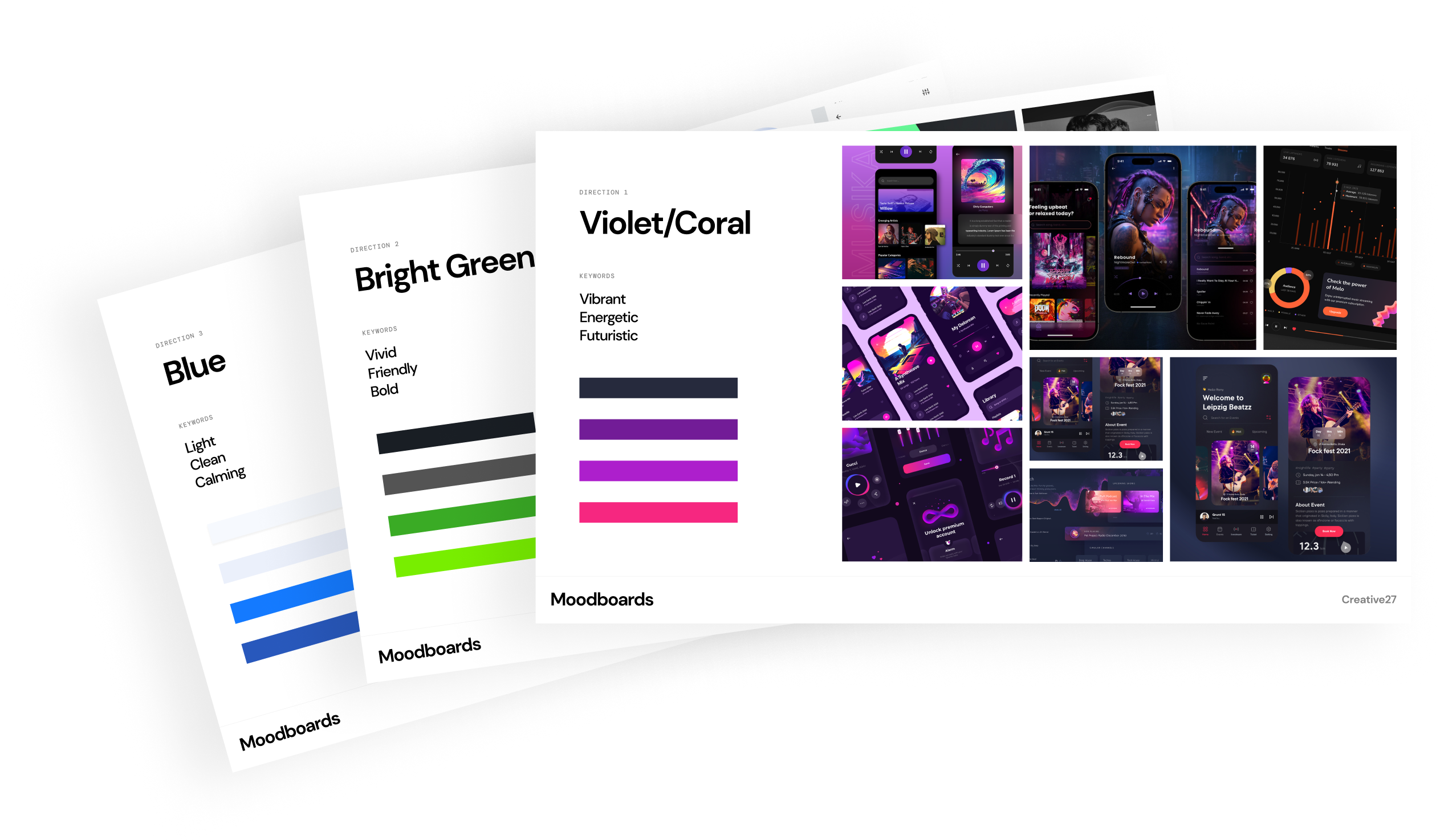
User Interface (UI) Design is the aesthetic discipline that guides the product's visual interaction with its users. It begins with the development of mood boards, which act as visual guides to establish the product's overall aesthetics.
This foundational step is crucial in developing a unified visual language, laying the groundwork for all design elements that follow.
Mood-Boards
Here I explored different aesthetic directions, focusing on modern and clean designs that reflect the premium quality of Grace Digital's radios.